
In 2026, winning mindshare and trust has become the defining challenge for brands competing in saturated digital markets. The post-COVID landscape fundamentally reshaped consumer behavior, with customer acquisition costs rising 50-60% across industries since 2021. Platform algorithm changes, ad fatigue, and the explosion of competition on social media platforms mean that simply existing online is no longer enough.
Brand awareness and authority represent two distinct but interconnected forces driving growth. Awareness puts you on the radar. Authority makes you the obvious choice. Together, they form the foundation of sustainable competitive advantage, reducing your marketing dollars spent per acquisition while building brand loyalty that compounds over time.
This article will show you how to build, measure, and connect both brand awareness and brand authority for growth. You’ll walk away with concrete frameworks, measurement approaches, and actionable strategies that reflect the realities of marketing in 2026, where AI-driven discovery prioritizes trust signals over sheer visibility, and where one trusted recommendation can outperform 10,000 low-trust impressions.
Estimated reading time: 9 minutes – updated March 31, 2026.
Understanding the distinction between being known and being trusted is fundamental to your marketing strategy. Brand awareness and brand authority operate on different planes, yet both are essential for converting potential customers into loyal customers.
Brand awareness refers to the extent to which consumers can recognize or recall your brand within a product category. It represents familiarity and memory presence, the foundational layer that enables all subsequent marketing efforts. When someone sees your logo, hears your brand name, or encounters your visual identity, awareness determines whether they register your existence at all.
Brand authority builds upon awareness by establishing your brand as a credible, expert, and trustworthy leader in its particular industry. It represents perceived expertise, reliability, and influence that shapes brand preference and purchasing decisions. Authority is what makes customers choose you over competitors even when alternatives exist.
Consider a new DTC skincare brand that goes viral on TikTok. They achieve high awareness, millions of views, widespread brand recognition. But without dermatologist-backed credentials or clinical research, their authority remains low. Contrast this with La Roche-Posay, a brand with decades of professional validation. Their strong brand authority means consumers trust their products for sensitive skin, even if a competitor’s brand awareness campaign generates more buzz.
Awareness is a prerequisite for authority. Unnoticed brands cannot cultivate trust. But awareness alone doesn’t guarantee sales or brand loyalty, it simply opens the door.
Not all awareness is equal. The depth of memory your brand occupies determines its commercial impact. Understanding this distinction shapes how you approach creating brand awareness and measuring its effectiveness.
Brand recognition represents the lowest threshold of awareness, consumers identify your brand when exposed to cues like logos, packaging, or audio signatures. Netflix’s “ta-dum” sound, introduced in 2015, exemplifies powerful recognition. Surveys show near-instant identification when participants hear those two notes. This type of awareness requires external prompts to activate.
Brand recall demands higher cognitive load. It’s the ability to name your brand unprompted when thinking about a category. When someone mentions electric vehicles and “Tesla” immediately comes to mind, that’s recall in action. This represents deeper mental availability than mere recognition.
Brand salience, also called top-of-mind awareness, sits at the peak. It’s being the first brand recalled in a buying situation, dominating the consideration set before alternatives even surface. Google achieves 90%+ top-of-mind awareness for search engines. This concept aligns with Aaker’s awareness pyramid and Keller’s brand salience framework, where salience forms the base of customer-based brand equity.
The awareness journey progresses from unknown to aided recognition to unaided recall to top-of-mind status. Brand awareness shows itself most powerfully when your brand represents the category default, when category need automatically triggers brand thought.
In an era of global competition and algorithmic gatekeeping, unnoticed brands cannot grow regardless of product quality. Your content marketing, your product features, your customer service, none of it matters if potential customers never discover you exist.
Awareness initiates the customer journey. It moves prospects from complete ignorance through consideration to purchase and eventually brand loyalty. Without this first exposure, the funnel never begins. Studies show brands with strong brand awareness reduce customer acquisition costs by 20-30% through direct traffic alone, bypassing the escalating costs of paid channels.
“You can have the best product in the world, but if nobody knows about it, you have nothing.”
Consider how awareness has driven growth for category leaders. Coca-Cola’s “Share a Coke” campaigns, running since 2011, sustain 40%+ global recall decades later. Dollar Shave Club’s 2012 viral video generated 12,000+ orders in 48 hours, and that awareness continues driving direct traffic years after Unilever’s acquisition. These branding efforts created mental availability that pays dividends indefinitely.
Brand awareness important to growth also extends beyond customers. Strong brand awareness attracts 2x more qualified talent, strengthening your employer brand and reducing hiring costs. When candidates recognize and respect your brand, your recruiting pipeline fills faster with better fits.
Authority converts attention into trust, brand preference, and pricing power. While awareness tells prospects you exist, authority tells them you’re the right choice. This distinction matters enormously when marketing efforts face skeptical, overwhelmed audiences.
Authority reduces perceived risk. For higher-ticket or B2B purchases, choosing a cybersecurity vendor in 2026, for instance, 77% of buyers cite trust as pivotal. When your brand’s reputation signals expertise, prospects feel safer committing budget and reputation to your solution. This is exactly that psychological shift that drives conversion.
Authority fuels referrals. Authoritative brands see 2-3x referral rates compared to recognized-but-untrusted alternatives. Satisfied customers become advocates when they trust brands enough to stake their own credibility on recommendations. This word-of-mouth generates positive word that compounds over time.
Authority strengthens SEO. Search engines reward trusted brands with higher click-through rates on search engine results page listings. Brands with strong brand authority earn more branded searches, more quality backlinks, and better positions in search engine results. Google’s E-E-A-T framework, Experience, Expertise, Authoritativeness, Trustworthiness, makes authority a ranking factor, not just a perception metric.
Consider HubSpot’s annual “State of Inbound” reports, published consistently since 2012. These research pieces generate 10,000+ leads yearly through media citations and expert references. By demonstrating expertise through original research, HubSpot built authority that simultaneously drives awareness and converts prospects, proving these forces multiply each other.
Brand awareness efforts must be measured with a mix of data sources to avoid relying solely on vanity metrics. The combination of quantitative signals and qualitative research reveals true mental availability among your target audience.
For quantitative measurement, track these core KPIs:
Share of search deserves particular attention. It measures how often your brand appears in category-related searches compared to competitors, providing a clear benchmark of brand’s visibility relative to the market.
Qualitative measurement requires direct research with your target audience. Deploy quarterly brand tracking surveys with a fixed sample size, 400 respondents in your target market provides statistical significance. Include both aided awareness questions (showing logos and asking for recognition, targeting 70%+) and unaided awareness questions (asking respondents to name brands in your category without prompts). Focus groups and interviews reveal where people first heard about your brand, informing channel allocation.

Authority manifests partly in SEO and PR metrics, partly in customer behavior and perception. Tracking brand authority requires examining multiple signal types to understand your true market position.
For SEO-oriented indicators, monitor domain authority or domain rating as tracked by tools like Ahrefs. A DR above 50 represents a solid benchmark for mid-tier authority in most industries. Track the number and quality of referring domains, 500+ quality backlinks indicates meaningful authority for growing brands. First-page rankings for core informational queries in your particular industry signal that search engines recognize your brand’s expertise.
Behavioral metrics reveal how authority shapes engagement. Monitor organic CTR on branded versus non-branded queries, branded searches should achieve 20-30% CTR while non-branded informational queries typically range 2-5%. Time on page for educational content (3+ minutes suggests genuine engagement), shares and saves on thought leadership posts, and content engagement rates all indicate authority resonance.
Perception metrics come from direct research. Net Promoter Score above 50 indicates strong advocacy. Customer satisfaction surveys reveal trust levels. Include specific expertise questions in brand studies, asking respondents to rate trustworthiness and brand’s expertise on scales of 1-10.
For practical application, compare your backlink profile and content engagement against a leading competitor in your niche over 12 months. If you gain 200 DR30+ referring domains while your competitor gains 150, and this correlates with 25% lead uplift, you’ve documented authority’s commercial impact.
A structured audit at least annually, ideally every Q1, benchmarks your progress and identifies gaps. Without systematic assessment, brand management becomes guesswork rather than strategy.
Begin by mapping your presence across key channels. Examine search (your share of voice in organic results), social (engagement rates across social media platforms), email (open rates above 25% indicate healthy list awareness), PR (brand mentions tracked via tools like Meltwater), and offline touchpoints. Identify where awareness is strongest and where it’s weakest.
Next, compare your brand metrics against 3-5 direct competitors. If your share of search sits at 15% while the category leader holds 35%, you’ve identified an SEO gap. If your social media engagement exceeds competitors but organic traffic lags, content and backlink investment becomes the priority.
Follow a simple four-step process. First, gather data across all channels over a six-week period. Second, benchmark against peer competitors to identify relative gaps. Third, identify specific opportunities, perhaps high social reach but low organic presence, indicating need for SEO content and backlinks. Fourth, prioritize quick wins versus long-term plays. Repurposing PR coverage for website content is a quick win. Building a comprehensive content hub takes longer but compounds authority.
Consider a fintech company discovering 80% of their awareness comes from TikTok but only 5% search share of voice. By pivoting to SEO investment, they could gain 30% website traffic within six months. This audit-driven insight enables strategic reallocation.
Repeat this audit every 6-12 months. In 2026’s rapidly shifting landscape, what worked last quarter may need adjustment.
Effective brand awareness campaign execution is multi-channel and must be consistent over years, not weeks. Flash-in-the-pan tactics generate temporary spikes, but building brand awareness that compounds requires sustained effort across various online channels.
The tactics that follow, paid media, social media, influencers, PR, and events, work together. Each reinforces the others. A YouTube pre-roll generates recognition. A TikTok presence deepens familiarity. PR coverage validates legitimacy. Events create memorable experiences. The combination builds the strong brand awareness that drives long-term growth.
Awareness-optimized campaigns differ from direct-response advertising. On Meta, use the brand awareness objective rather than conversion objectives to maximize reach and recognition. YouTube CPM campaigns prioritize impressions over clicks, building memory through repeated exposure. Connected TV advertising, which surged since 2022, offers premium brand-building environments.
Balance direct-response creative with brand creative. While performance ads focus on features and offers, brand creative emphasizes story, symbols, and emotional associations. Both belong in your mix.
Use frequency caps and reach targets over a 3-6 month window. Research shows 3-5 exposures over this period builds memory without triggering ad fatigue (which typically begins after 7+ exposures). Short bursts may spike awareness temporarily, but sustained campaigns create lasting presence.
Best practices for awareness advertising:
A 2025 fintech app launch exemplifies this approach. By combining YouTube pre-roll and TikTok Spark Ads over six months, they achieved 25% recall lift in their target audience, significantly outperforming competitors who ran concentrated two-week blitzes.
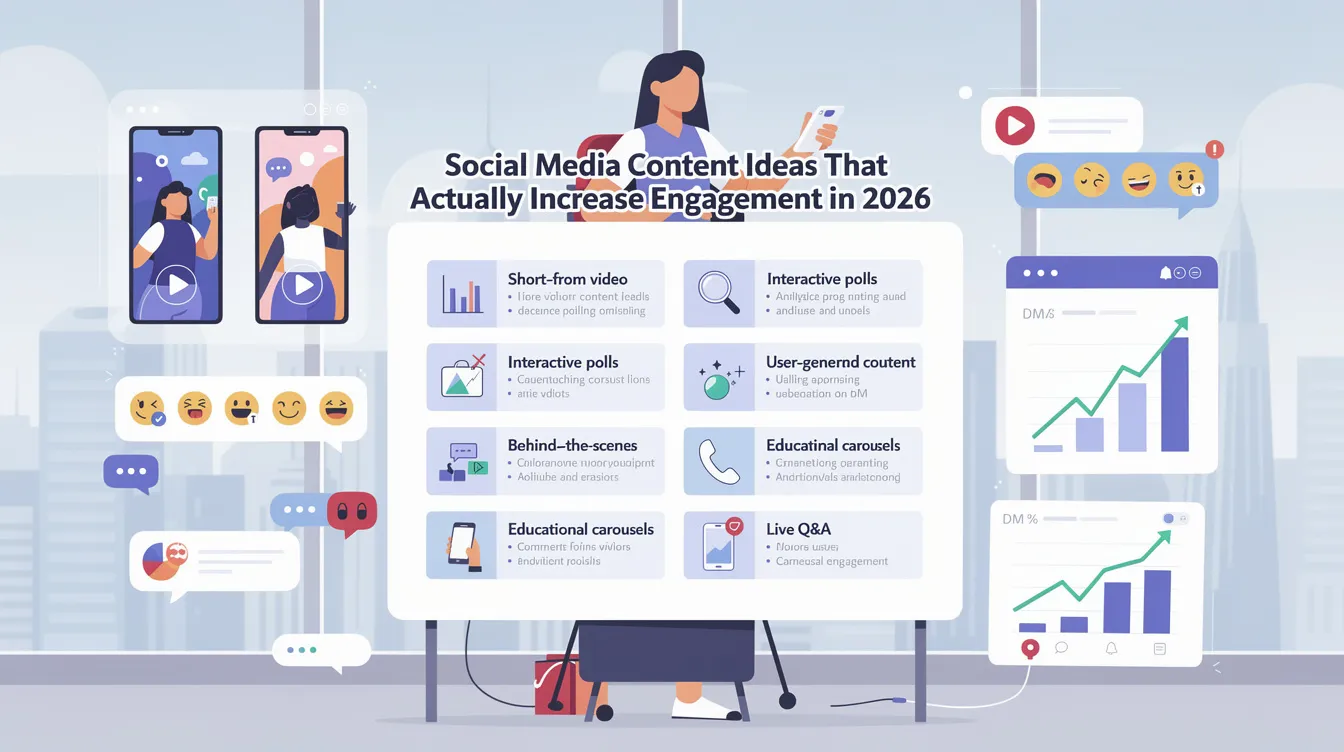
Consistent posting across social media platforms builds recognition and familiarity over time. But presence alone isn’t enough, social media engagement deepens awareness into early trust.
Focus on platform-native content formats. Reels and Shorts generate 2-3x engagement compared to static posts. Carousels perform well for educational content on Instagram and LinkedIn. Each platform has its grammar; speaking it fluently earns algorithmic favor and audience attention.
Community features transform passive followers into active participants. Comments, lives, AMAs, and groups create two-way relationships. These social media interactions build the brand voice recognition and personal connection that advertising alone cannot achieve. User-generated content from 2023-2026 has proven particularly powerful, UGC generates 4x trust compared to brand-produced content.
Consider a DTC brand that scaled awareness through a recurring weekly TikTok series. By posting consistently every Tuesday with a recognizable format and brand voice, they grew from 10k to 500k followers over 18 months. That consistency, same day, same format, same energy, created appointment viewing and compounding recognition.

One-off sponsored social media posts generate temporary spikes. Longer-term creator partnerships build cumulative awareness through repeated exposure to new audiences who trust the creator’s endorsement.
Focus on micro- and mid-tier creators with 10k-100k followers whose audiences tightly match your niche. These creators typically achieve 5-10% engagement rates compared to 1-2% for mega-influencers. Their recommendations carry more weight because their audiences perceive authentic relationships rather than paid placements.
A sustainable fashion brand executed this effectively in 2024. They partnered with 10 micro-influencers on Instagram and YouTube over a six-month period. Rather than scripted promotions, creators received products and creative freedom to integrate them naturally. The campaign boosted aided recall by 40% in their target demographic, demonstrating how authentic partnerships raise brand awareness more effectively than forced endorsements.
The key is creative freedom. Influencers know their audiences better than you do. Provide guidelines and key messages, then trust them to translate your brand into their voice.
Media coverage in relevant industry publications compounds brand awareness and perceived credibility simultaneously. A single feature in a respected publication reaches concentrated, relevant audiences while providing third-party validation that advertising cannot replicate. Press releases remain effective for announcements, but earned coverage drives stronger results.
Conferences, webinars, and virtual summits, particularly common since 2020, serve dual purposes. They generate awareness through attendance and promotion while also building authority through the expertise demonstrated. Industry events position your brand alongside category leaders, benefiting from association.
Local or category-specific sponsorships reach concentrated audiences efficiently. Sponsoring a 2026 industry meetup, a relevant podcast series, or a niche sports team places your brand before pre-qualified prospects repeatedly. The frequency and context build strong associations.
Combine PR with owned content for maximum impact. Repurpose media coverage on your website and social channels. When a publication features your company, amplify it across every marketing channel, enhancing visibility while creating social proof that feeds authority.
Building brand authority requires consistently demonstrating expertise, reliability, and consistent value over time. Unlike awareness, which can spike quickly, authority compounds through accumulated evidence of competence.
Authority tactics overlap with awareness tactics but require deeper, more educational executions. While awareness asks “Do you know us?”, authority asks “Do you trust brands like us to solve your problems?” The answer depends on thought leadership, content depth, customer experience, and validation from third parties.
Creating in-depth content positions your brand as the industry leader. Long-form articles, whitepapers, research reports, and webinars demonstrate expertise that surface-level content cannot match.
Proprietary data provides the foundation for differentiated thought leadership. Annual surveys conducted since 2022 yield “State of the Industry” reports that media and peers reference. When journalists need statistics or expert perspectives, they cite the brand that produced the research, generating backlinks, brand mentions, and authority simultaneously.
Regular speaking engagements reinforce expertise. Conferences, podcast appearances, and LinkedIn Live sessions with clear topics demonstrate that others value your perspective enough to feature it. Document these appearances with timestamps and topics for your website, creating an accumulated record of expert validation.
Buffer exemplifies this approach. Their social media reports, published consistently for years, have been cited over 500 times by media outlets. This recurring research series transformed them from “another social media tool” to the trusted source for social media metrics and insights.
Comprehensive guides, frameworks, and how-to resources outperform short generic posts in building authority. When your content thoroughly solves a problem, readers recognize brand’s expertise and return for future challenges.
Create pillar pages and content hubs that cover core customer problems end-to-end. Update these yearly, 2022, 2023, 2024 editions, keeping them current while building accumulated authority through backlinks and citations. These resources become the “go-to” destinations for specific topics, earning brand positioning as category experts.
Include real examples, case studies with specific outcomes, and templates rather than abstract theory. Practical utility generates bookmarks, shares, and repeat visits. When someone downloads your framework and it works, they become existing customers predisposed to trust your solutions.
A SaaS company created “The Complete Guide to [Category]” in 2022, updating it annually with new data and examples. By 2025, it ranked #1 for primary category terms and generated 35% of qualified leads, proving that quality content compounds authority and business results simultaneously.
Authority is validated in the market by customer outcomes and public feedback. Self-proclaimed expertise means little without evidence. Customer loyalty and advocacy demonstrate that your brand delivers on promises.
Systematically collect reviews on platforms like Google, G2, Trustpilot, or niche-specific sites relevant to your particular industry. Target 4.5+ star ratings as a baseline. Develop processes for requesting reviews after positive interactions, post-purchase, post-support resolution, or after hitting success milestones.
Integrate testimonials, case studies, and specific success metrics into your website and sales materials. “Increased leads by 47% in Q4 2025” carries more weight than generic praise. These proof points reduce perceived risk for potential customers evaluating your solution.
Video testimonials humanize authority especially effectively. Customer interview content showing real people discussing real outcomes builds trust that written testimonials cannot match, increasing conversions by up to 80% on pages where they appear.
Being cited and linked to by respected brands, media, and institutions signals high authority. These external validations tell search engines and prospects alike that others consider your brand a legitimate source.
Guest posting on established blogs places your expertise before new audiences while earning valuable insights in the form of backlinks. Contributing expert quotes to journalists via platforms like HARO generates brand mentions in publications you couldn’t access otherwise. Co-authoring reports with complementary brands multiplies reach and credibility.
Track progress with tools that show increases in referring domains over 6-12 month periods. A successful guest article or research collaboration should yield measurable gains in backlinks and referral traffic. One B2B company’s quarterly contributed articles to three industry publications generated 40 new referring domains and 15% increase in organic traffic over six months, demonstrating how consistent value provided to others builds your own authority.
Awareness and authority should be planned together, not as isolated marketing campaigns. They form a system where each reinforces the other, creating a compound effect that exceeds what either achieves alone.
Top-of-funnel awareness campaigns feed audiences into mid-funnel authority-building content. A social ad generates first exposure and recognition. The prospect clicks through to an educational article demonstrating your expertise. They subscribe to your newsletter, receiving valuable insights weekly. They attend a webinar diving deep into their challenge. Through this journey, awareness transforms into trust, and trust transforms into conversion.
Consider the customer journey: first exposure via social ad introduces the brand. The prospect reads an educational article addressing their problem. They download a comprehensive guide requiring email signup. Over 30-60 days, email nurturing delivers more authority content. They attend a webinar featuring original research. Finally, they request a demo or make a purchase, now a customer whose journey began with awareness and converted through authority.
Marketing automation and remarketing connect these stages. Configure sequences that move people from awareness content (blog posts, social content) to authority content (guides, webinars, case studies) over 30-90 days. Data shows 15-25% of awareness-stage prospects progress to authority content with proper nurturing, and those who do convert at significantly higher rates.
Search engine optimization in 2026 cannot be separated from authority building. Google’s E-E-A-T framework, Experience, Expertise, Authoritativeness, Trustworthiness, makes brand authority a direct ranking factor, not merely a byproduct of good content.
Brands with strong authority earn higher click-through rates on search engine results page listings. When users recognize and trust brands in search results, they click more often. This behavioral signal feeds back into rankings, creating a virtuous cycle. More clicks lead to better positions, which lead to more visibility, which builds more recognition.
High-quality content plus authoritative backlinks increases visibility for both informational and commercial keywords. Your thought leadership content ranks for educational queries, building awareness. Your product pages rank for commercial queries, driving revenue. Both benefit from the domain authority built through consistent value demonstration.
Consider a site targeting a competitive keyword. Starting on page 3, they implemented authority-building: consistent thought leadership content, guest posting, research reports, and review collection. Over 9-12 months, their domain rating increased from 35 to 52. That same keyword page moved to page 1, generating 200% traffic increase. The content didn’t change, the authority supporting it did.

Imagine a B2B software brand launching in early 2024 with minimal awareness and no established authority. Their product solves a real problem, but their target audience doesn’t know they exist. How do they progress from unknown to trusted? This ongoing process requires phased execution.
During months 1-6, focus on establishing awareness. Allocate budget primarily to paid reach, YouTube pre-roll, LinkedIn sponsored content, TikTok Spark Ads reaching the target audience. Simultaneously, build foundational content: a core blog library addressing frequent customer questions, active social media posts establishing brand voice, and initial PR outreach. The goal is 20% aided awareness in your target market by month 6.
Months 7-12 shift emphasis toward authority. Launch your first original research report. Pursue guest posting on 10 industry publications. Implement systematic review collection targeting G2 and category-specific platforms. Host monthly webinars featuring internal experts and customer success stories. Target domain rating increase of 20 points and NPS improvement of 15 points.
Months 13-24 optimize and scale. With baseline awareness and emerging authority established, refine based on data. Double down on channels showing strongest ROI. Expand thought leadership into adjacent topics. Pursue speaking opportunities at industry events. Target 25% share of voice in search and 2x revenue from organic channels compared to month 12.
Throughout this roadmap, measure quarterly against the KPIs outlined earlier. Adjust tactics based on what the data reveals. The brands that win aren’t those who execute the perfect initial plan, they’re those who iterate fastest based on market feedback.
Brand awareness gets you noticed. Brand authority gets you chosen, repeatedly. In 2026’s crowded markets, you need both working together to reduce acquisition costs, build brand equity, and sustain long-term growth.
Building brand authority and maintaining brand authority require consistent messaging, quality content, and measured experiments over months and years. There are no shortcuts to trust brands and consumer behavior. But brands that invest systematically in awareness and authority building create compounding advantages that competitors cannot easily replicate.
Your next steps involve auditing where you stand today, measuring current awareness through branded search volume and share of voice, assessing authority through domain rating and customer perception surveys, then identifying the gaps between your current position and where category leaders sit. Prioritize quick wins like repurposing existing content and collecting customer testimonials while building longer-term initiatives like original research and comprehensive content hubs.
Start this week by defining 3 awareness KPIs and 3 authority KPIs for Q2 2026. Track them monthly. Let the data guide your investment. The brands that dominate tomorrow are making these decisions today.