
In 2026, buying clicks has never been cheaper. Google Ads, Meta Ads, and LinkedIn deliver targeted visitors for under $1 per click in many industries. Yet global ecommerce conversion rates still hover around 2-3%, meaning 97% of that traffic generates zero revenue.
The problem isn’t your ads. It’s what happens after the click. This guide will show you how to design the complete customer journey from first website visit through to purchase, giving you a practical framework to turn clicks into customers this quarter.
“Click to customer” describes the complete path from someone clicking your ad, search result, or social post through to becoming a paying customer. It’s distinct from “click to lead,” which stops at capturing an email or phone number.
Many businesses celebrate lead generation numbers while ignoring that their enquiry-to-sale rate sits below 20%. Tracking only leads gives a false sense of success.
Think of it as a measurable funnel: impression → click → micro-engagement (scroll, video watch) → enquiry → sale. For a plumber in Auckland targeting “emergency plumber Auckland 24/7,” optimising each stage might mean the difference between a 2% and 10% overall conversion rate from the same traffic.
The click to customer journey starts with attracting visitors who could realistically buy within 30-90 days. More traffic means nothing if those users have no purchase intent.
Intent-focused keywords make all the difference. “Emergency plumber Auckland 24/7” attracts ready-to-buy consumers, while “how to fix a leaky tap” attracts DIYers who’ll never call. Data shows intent-focused queries can yield 5x higher enquiry rates with bounce rates dropping from 70% to under 40%.
Align your ad copy directly with your landing pages headline to avoid early exits. When visitors interact with an ad promising “Same-Day Service” and land on a generic homepage, 60% will leave within 5 seconds.
Use negative keywords like “free” or “DIY” to filter out low-intent clicks, this alone can save 30% of wasted ad spend.
Most visitors aren’t ready to buy on their first click. Your job is to provide clarity, reassurance, and direction so more visitors engage deeper.
Your homepage and key pages must answer three questions within 5 seconds: What do you do? Who is it for? What should I do next? Use a clear visual hierarchy with a strong headline (48-60pt), benefit-focused subheading, and one primary call to action above the fold.
Fast load times are crucial, Google reports a 32% bounce increase for every additional second of loading on 4G networks. Mobile-first web design with accessible 16px+ fonts isn’t optional for kiwi businesses competing in today’s market.
Friction silently kills conversions between click and enquiry. Even potential customers with high interest will abandon a confusing experience.
To quickly audit your main landing page, check for these friction points: pages loading over 3 seconds, intrusive exit intent popups on mobile, hidden pricing that forces users to dig, jargon-heavy copy that confuses rather than clarifies, and contact details buried in footers.
A Sydney service firm simplified their cluttered menu to a streamlined layout with clear CTAs. Time-on-page jumped from 45 to 120 seconds, and enquiries increased 35%.
Limit navigation options on campaign landing pages to 3-5 items maximum to reduce decision paralysis.
First-time visitors, comparison shoppers, and ready-to-buy users need different relevant content. Casual browsers want education; hot prospects want proof and pricing.
Map your content to each stage: educational guides and FAQs for awareness, detailed service pages with case studies for evaluation, and testimonials with clear enquiry forms for decision. Link internally from your “2026 Buyer’s Guide” directly to relevant service pages.
This content should feel like a helpful advisor, not a pushy sales pitch, especially for higher-ticket B2B services where trust takes longer to build.
Good CTAs feel like the next logical step in a conversation, not a sales button demanding attention.
Each page should have one primary CTA (e.g., “Book a free 15-minute audit”) and one or two softer options (e.g., “Download our 2026 pricing guide”). Vary placement by journey stage: learn-more CTAs appear high up, while stronger enquiry CTAs follow proof sections.
Use action-led copy with concrete outcomes: “Get your quote in 60 seconds” outperforms generic “Submit” buttons by 40%. Visual contrast matters too, orange buttons on white backgrounds can increase clicks by 21%.
Micro-conversions, small steps like newsletter signups or checklist downloads, bridge the gap between click and full enquiry for potential leads who aren’t ready to commit.
Keep first-touch forms short. Email-only forms see 15% completion rates versus 8% for five-field forms. Use progressive profiling to gather more data over time rather than upfront.
Add trust signals near forms: privacy notes, “no spam” messages, secure badges, and response time promises like “We reply within 1 business day.” A/B test form headlines, “Get my quote” typically outperforms “Submit” by 18%.
Here’s the data most businesses ignore: 70-80% of conversions happen after the first website visit. Your digital marketing strategy must include follow-up across email and retargeting ads.
Segment contacts by behaviour. Downloaders get educational sequences. Cart abandoners see reminder ads. Demo watchers receive personalised follow-up. This turns casual browsers into engaged potential customers over time.
Emails should read like messages from a real person offering value, not corporate newsletters nobody asked for.
Structure a 5-day sequence: Day 1 welcome with expectations, Day 3 how-to content solving a common problem, Day 5 case study with proof, then a soft consultation invite. Subject lines like “3 costly mistakes in [service] projects this year” achieve 45% open rates versus 20% for generic newsletters.
Add personalisation tokens and behaviour triggers. Include clear unsubscribe links, building long-term trust matters even if they don’t convert immediately.
Retargeting shows tailored messages to people who clicked but didn’t convert. It’s efficient when done right, annoying when overdone.
Segment audiences by behaviour: pricing page visitors, cart abandoners, video watchers. Match creative to stage, educational ads for early-stage visitors, offer-based ads for abandoners.
A 7-day cart abandonment flow might work like this: Day 1 reminder (15% return), Day 3 social proof ad (10% add-to-cart), Day 7 limited incentive (20% purchase). Cap frequency at 3-5 impressions to prevent fatigue.
Trust is usually the final barrier between click and loyal customers, especially for higher-value services. Your site needs credibility signals throughout.
Include recent testimonials (2024-2026 dated), case studies with real names and locations, review scores, and recognisable client logos. Place proof strategically near CTAs, pricing sections, and contact forms, testimonials near decision points boost conversions by 34%.
Show process clarity with step-by-step “how we work” sections. Add guarantees like “100% satisfaction or refund” to reduce hesitation by up to 25%.
Social proof demonstrates that people like your target audience have already chosen and benefited from your services.
Use specific evidence: “Over 300 projects delivered since 2020” or “4.8★ rating from 120+ Google reviews in Brisbane.” Integrate third-party proof from Google Reviews or industry awards rather than generic praise.
In case studies, quantify outcomes, revenue increases, time saved, cost reductions with real numbers deliver valuable insights that convert. Add team photos and short bios to humanise your brand and support real connections with visitors.
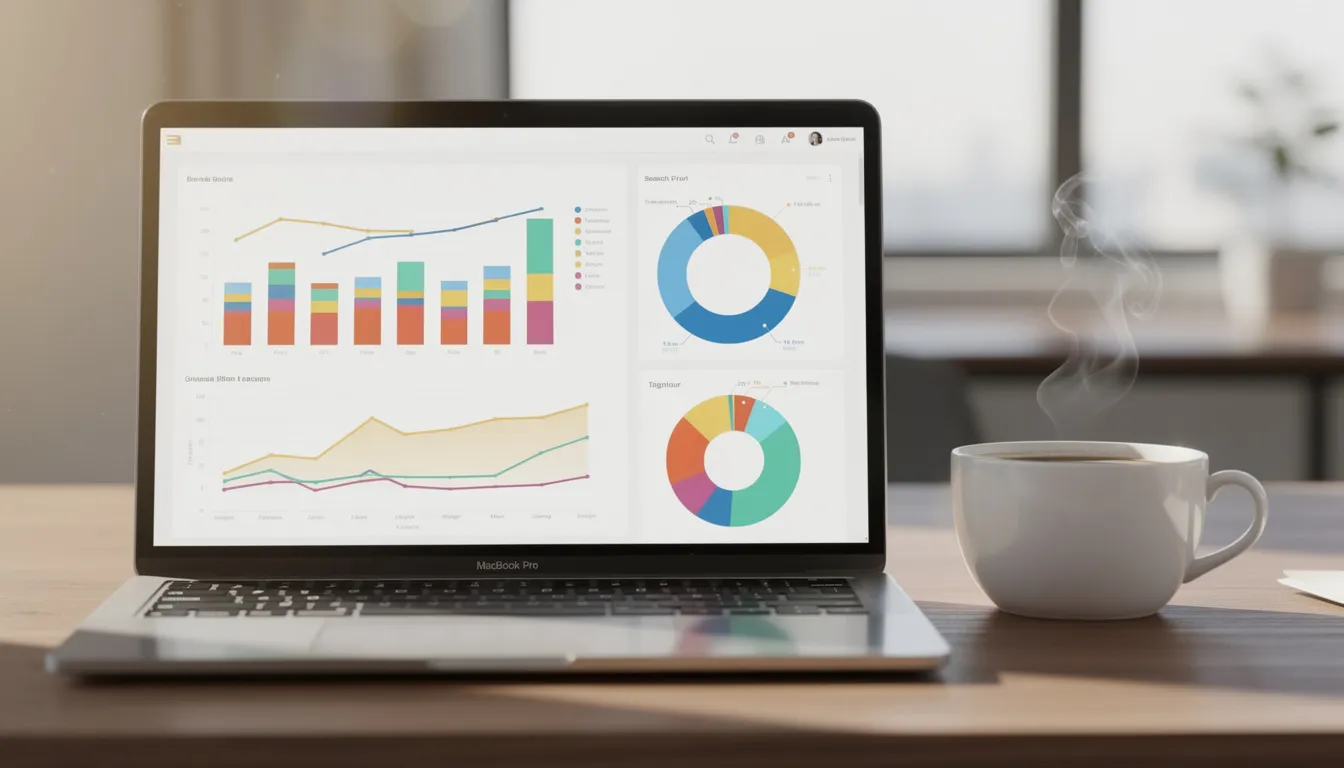
Data should show where your click to customer journey breaks, not just how many clicks you bought. Track metrics at each stage: click-through rate (target >5%), bounce rate (<40%), scroll depth (>60%), form completion, and enquiry-to-sale rate (>15%).
Connect Google Analytics 4, heatmap tools like Hotjar, and your CRM to identify where users drop off. Monthly cross-team reviews where marketing and sales teams walk through the full funnel together help spot leaks.
Focus on one bottleneck at a time. Fixing quote response time from hours to under 5 minutes can lift close rates from 40% to 80%.
Run simple A/B tests without needing a data science team. Test one element at a time, headlines, hero images, CTA text, or form length, with at least 2-4 weeks of data.
Set clear hypotheses before testing: “Shortening our form from 7 fields to 3 will increase completions by 20%.” Document results in a shared log so improvements accumulate throughout the year.
Use qualitative data from on-site surveys and chat transcripts to explain the “why” behind numbers. This combination delivers 2-5x funnel gains over time.
The journey breaks into six stages: attract the right click, engage visitors on your site, guide with natural CTAs, nurture through email and retargeting, prove credibility, and optimise with data.
For your 30-60 day roadmap, start with an audit of your current funnel against the benchmarks above during week one. Weeks two through four, focus on intent-aligned keywords and landing page improvements for a 20% traffic quality lift. Weeks five and six, implement nurturing sequences to recover 15% of lost leads. Week seven adds proof elements near key decision points, then ongoing testing compounds gains.
Improving just one or two stages can significantly lift revenue from the same ad spend. The shift isn’t about chasing more clicks, it’s about building a system that reliably converts a healthy percentage into sales.
Review your current funnel this week. Identify where the biggest drop-off happens between click and customer, then choose one specific change to implement. That single focus could make all the difference to your revenue this quarter.