Auckland is home to roughly 1.7 million people, most of them scrolling social media on their commute, at lunch, and after hours. If your business isn't showing up strategically in those feeds, someone else's is. This guide breaks down exactly how Auckland brands can use social media to drive real revenue, not just likes, in 2026.
82% of New Zealand's population uses social media actively. Facebook is used daily by 66% of Kiwi adults, and Instagram reaches roughly 53.5% of the country's population. That's not a trend; it's the infrastructure of modern attention.
For Auckland businesses specifically, the dynamic landscape is shaped by:
The old "post and hope" approach-publishing generic content and waiting for organic reach-is effectively dead. Organic reach on Facebook and Instagram continues to decline unless content is genuinely engaging. Strategic social campaigns tied to measurable outcomes like enquiries, store visits, and online purchases are what produce results.
Every Auckland brand's social media plan should begin with business objectives for the next 3–12 months, not with "Which platform is trendy?"
Typical objectives for Auckland businesses include:
Pick 1–3 primary goals. Something like "Generate 60 qualified enquiries per month from Auckland homeowners" is far more useful than "grow our followers." Then create a one-page content strategy covering your target audience segments, chosen platforms, content pillars, paid social campaigns, and key metrics like cost per lead or cost per sale.
Build owned channels (email list, SMS) alongside your follower count. Algorithm changes happen without warning-your email list is yours regardless.
Focus on 1–2 core platforms plus one support channel. Match them to where your audience actually spends time.
Instagram is popular with the 18–45 demographic in NZ, making it ideal for hospitality, retail, and lifestyle brands. TikTok is the fastest growing platform in New Zealand, and platforms like TikTok and Instagram are increasingly used as local search engines by users looking for "best brunch Auckland" or "plumber near me." LinkedIn is essential for B2B marketing in Auckland, particularly around the CBD, Newmarket, and industrial hubs. And don't overlook that YouTube is the second-largest search engine globally-video content lives there long after it fades from other feeds.
It's often better for Auckland businesses to dominate one or two platforms with consistent, engaging content than to post weakly across every network.
A clear brand identity and consistent brand voice help Auckland brands stand out in crowded feeds and become instantly recognisable. Without them, you're just noise.
Define your visual branding elements-colours, fonts, photography style-that fit the city's character while remaining unique to your business. Then shape a brand voice that suits Auckland audiences: warm but direct, inclusive, and occasionally referencing local context.
Kiwi audiences respond strongly to a genuine human voice in marketing. A boutique Takapuna retailer might lean into a relaxed, beachy tone. A Parnell professional services firm might choose an authoritative voice that still feels approachable. Whatever you choose, align it across organic Instagram posts, paid social campaigns, website copy, and offline touchpoints so customers experience one coherent brand.
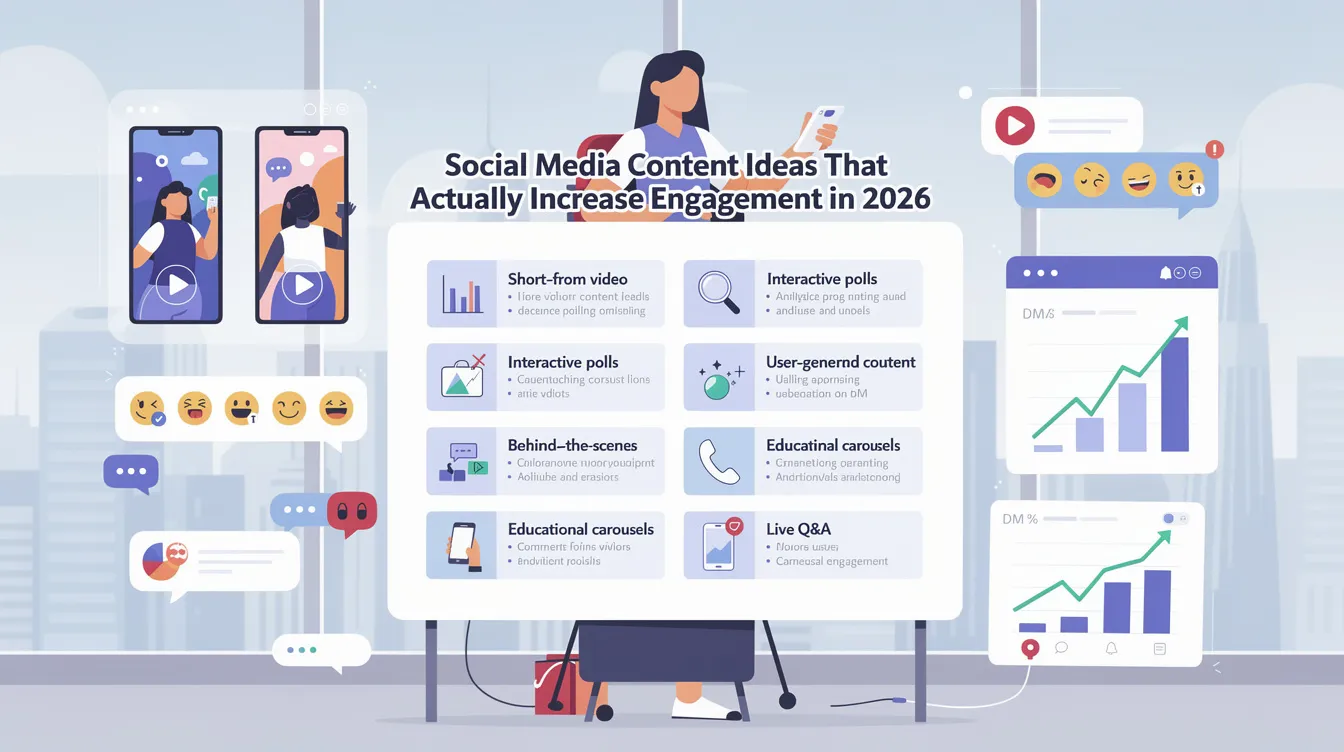
Engaging content, not just frequent posting, is what drives reach, clicks, and revenue in Auckland's saturated social feeds. Short-form video leads in social media engagement across every major platform.
Strong content pillars for Auckland businesses:
Follow an 80/20 mix: roughly 80% helpful, entertaining, or community-driven posts and 20% direct offers. Auckland brands that leverage community-driven content often see improved performance. Content that ties a product to shared experiences performs better on social media than isolated product shots.
Younger consumers prefer authentic content over polished corporate advertising in Auckland. Micro-influencers yield higher engagement rates in Auckland than generic celebrity endorsements. A mix of educational, entertaining, and useful content can effectively engage social media users far more than a stream of promotions.
Post 3 to 5 times per week on your core platforms. Use local photography and real staff faces rather than stock imagery.

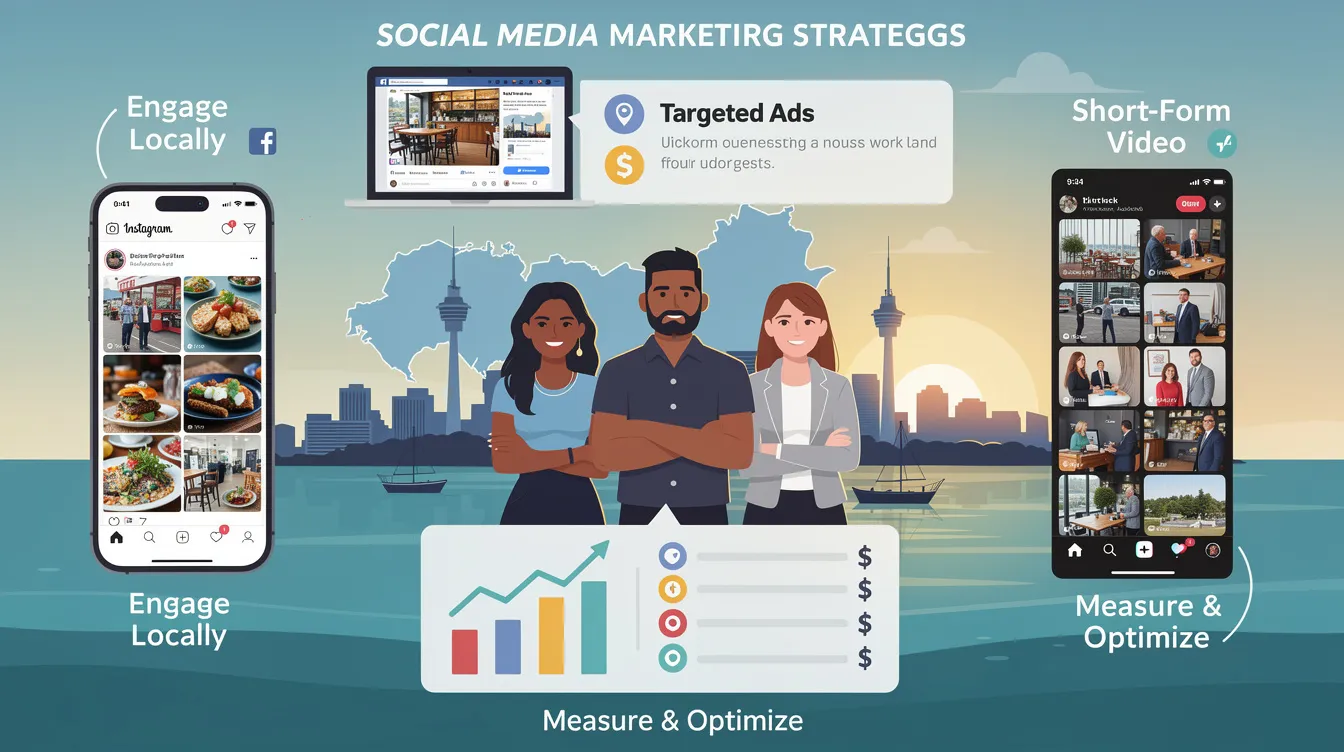
Auckland brands can reduce wasted ad spend by making creative content and targeting hyper-local. Successful social media campaigns in Auckland prioritize local community relevance, and brands should prioritize local relevance in their social media content to drive foot traffic.
Suburb segmentation: North Shore vs West Auckland vs East and South. Name specific suburbs like Takapuna, Albany, Mt Roskill, and Manukau in your copy. Naming the suburb in captions can reduce lead costs by 30–40%.
Seasonal rhythms: Summer on the Hauraki Gulf, school holidays, Auckland Anniversary Weekend, Matariki, and the Christmas retail peak all create natural content hooks. Using local landmarks and culturally relevant elements boosts audience engagement in Auckland.
Cultural diversity: Auckland's population includes Māori, Pacific peoples, and Asian communities. Thoughtful imagery, respectful use of te reo Māori, and representation across your creative isn't optional-it's expected. The NZ On Air "Where Are The Audiences 2026" report highlights distinct content preferences across these communities.
Organic reach alone is rarely enough in 2026. Auckland businesses typically need paid campaigns to generate leads, and a structured approach to paid media on Meta, TikTok, and LinkedIn is crucial for growth.
Typical paid social campaigns for Auckland businesses:
Realistic budgets: Many small businesses start with NZD $1,000–$2,000 per month on meta ads. Competitive sectors like real estate or legal may need $2,500–$4,000+. Cost per click in niche B2B sectors is rising as more brands compete for the same audiences.
Structure campaigns in three layers: cold audience prospecting, warm retargeting of website visitors and social engagers, and loyalty campaigns for existing customers. Test multiple ad creatives, headlines, and audiences, and refresh content every few weeks to prevent fatigue.
Dive HQ Auckland generated nearly NZ$170,000 in revenue within three months using a focused paid social and search strategy-proof that well-managed ad spend translates directly to revenue for local businesses.
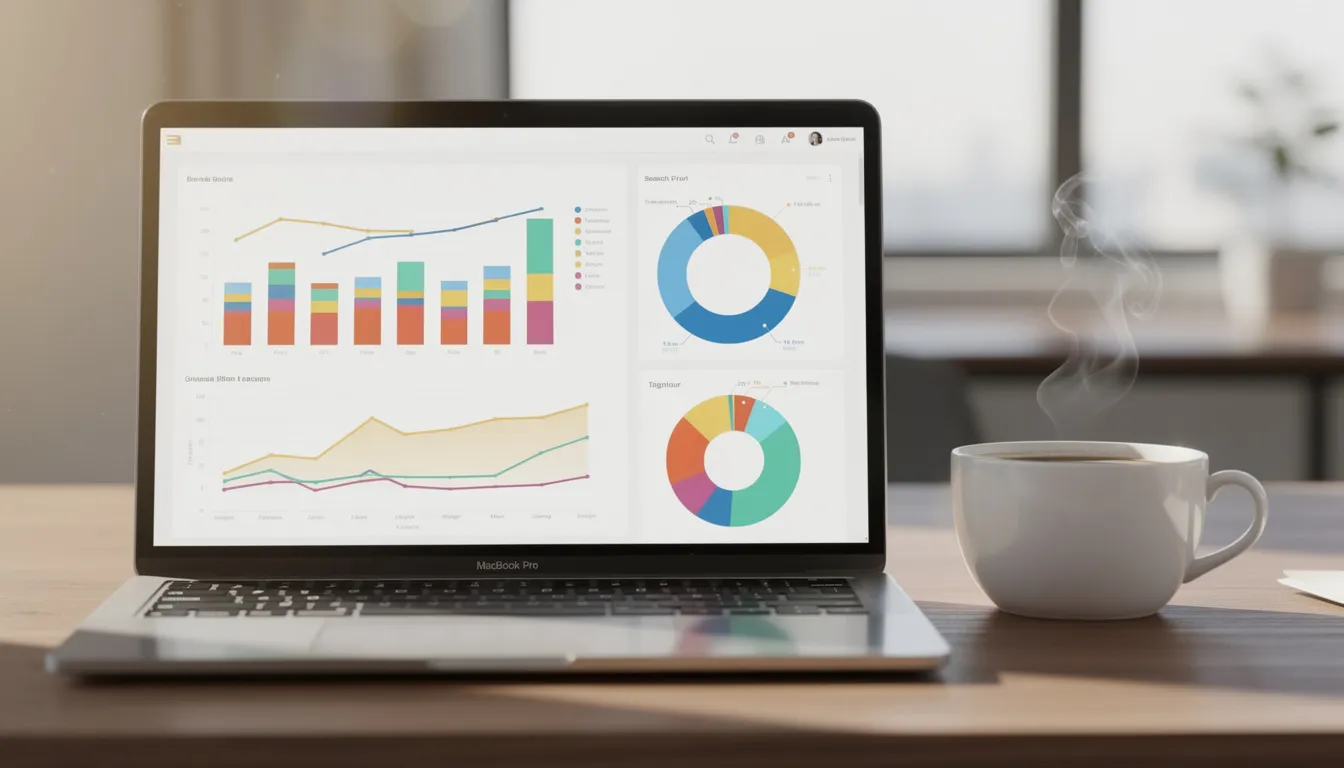
Many businesses track likes and followers but never connect social media to business objectives. That has to change. Analytics and proper tracking infrastructure are what make the difference.
Key metrics aligned with Auckland business goals:
Use native platform analytics, Google Analytics 4 with UTM tags, and Facebook Pixel or Conversion API to track which social campaigns drive real outcomes. MSME generated NZ$568,000 in revenue from 532 leads over 12 months, with a cost per lead of roughly $49 and an average job value of $7,700-the kind of data that makes scaling decisions simple.
Airscape's conversion rate climbed from 1.11% to 15.79% after a tracking overhaul, demonstrating how fixing your measurement process alone can reveal a measurable return that was always there.
Run a basic monthly reporting rhythm: review campaigns, identify top-performing creatives, calculate ROI, and reallocate spend from under-performing ads to winners.
Auckland brands must balance bold social media marketing with compliance, especially in regulated industries like finance, health, and real estate.
Key New Zealand requirements in plain language:
For negative comments from Auckland customers: respond promptly, remain calm, offer practical solutions, and take complex issues to private channels while leaving a constructive public reply. Create internal response guidelines so your team handles complaints, trolls, and sensitive topics consistently in line with your brand voice.
Thoughtful, transparent handling of issues can actually strengthen trust and community engagement with the wider local audience watching the interaction.
Here's a simple roadmap for Auckland SMEs wanting to turn social media into more leads and new customers.
Days 1–30: Clarify business objectives. Choose 1–2 main platforms. Set up tracking (pixels, GA4). Define your brand identity and brand voice. Prepare a basic content calendar with 10–20 post ideas mapped to Auckland seasons and suburbs.
Days 31–60: Post consistently 3–5 times per week. Launch your first small paid social campaigns. Test audiences-e.g. people within 8km of your business location. Engage with comments and messages quickly to build community engagement.
Days 61–90: Review performance data. Cut weak campaigns. Scale the best performers. Create new creative content based on what resonated with your local audience. Refine targeting around high-converting suburbs or demographics.
At the end of 90 days, decide whether to continue managing in-house or seek specialist support to scale your digital marketing and social campaigns further.
Many Auckland businesses begin managing social media themselves but reach a point where time, skills, or results limit further growth.
In-house teams handle well: Day-to-day content creation, quick local stories, and immediate customer service responses that need intimate brand knowledge.
A social media agency adds value for: Strategy, paid social campaigns at scale, advanced analytics, creative direction, and integrating social with broader marketing.
Signs it might be time to seek outside help:
Even committed DIY brands benefit from occasional strategy sessions or audits to stay current with fast-changing algorithms and ad tools. Package deals that combine strategy with execution can bridge the gap between doing everything yourself and handing it all off.
Most Auckland businesses see early signs of traction-reach, audience engagement, initial enquiries-within 2–4 weeks of consistent posting and small paid campaigns. Meaningful patterns in leads and revenue usually become clear after 60–90 days of steady effort. Highly competitive sectors like real estate, legal, and finance may need several months of testing creatives and audiences to hit sustainable cost-per-lead targets.
Many smaller local businesses start with NZD $1,000–$2,000 per month on Meta to test offers and learn which audiences convert. Service-based or B2B brands using LinkedIn often need $1,500–$4,000 monthly due to higher click costs but higher lead values. Treat the first 1–2 months as paid learning, then increase spend on campaigns that clearly produce profitable new customers.
Social commerce and social media work well for hospitality, tourism, health and fitness, trades, professional services, education providers, and e-commerce. The key is having a clear offer and a way to convert online attention into bookings, calls, or purchases. A Glenfield gym promoting limited-time membership deals, a Pukekohe tradie collecting quote requests, or a Newmarket retailer driving in-store traffic during sales are all strong use cases.
For most local businesses, 3–5 posts per week on Facebook and Instagram works well, with more frequent Stories or Reels where the team can manage it. LinkedIn B2B brands should aim for 2–4 posts per week. TikTok-focused brands may need 3–7 short-form videos weekly. Quality and consistency matter more than posting daily-choose a realistic schedule you can sustain.
Conduct a quick audit: review the last 60 days of posts and campaigns, identify top performers, and note common themes. Test one new paid campaign focused on a single, clear offer for a specific Auckland suburb or audience segment. Refresh your creative with more human, local content and tighten tracking so you can see which efforts actually produce leads, sales, or bookings. Sometimes the insights from a simple audit reveal that your best-performing content was hiding in plain sight.