In today’s competitive digital marketing landscape, businesses constantly face an important question: SEO vs paid ads—which should come first? Both strategies help companies appear in search engines, attract customers, and increase website traffic, but they work very differently.
Many small businesses struggle to decide whether to invest in paid ads for instant visibility or focus on search engine optimisation for long-term success. Understanding the strengths of SEO vs paid strategies helps businesses make smarter decisions based on their goals, budget, and timeline.
When evaluating SEO vs paid ads, it is important to remember that each method offers unique advantages. While paid advertising delivers quick results, SEO builds sustainable credibility and long-term value.
When users type queries into search engines, they see two main types of listings: paid ads and organic listings. The paid ads appear at the top of search engine results pages, while organic search results appear below them.
These search results are generated through search engine algorithms, which determine how websites rank for certain search terms.
Businesses investing in SEO vs paid ads strategies try to gain visibility in these two areas. Appearing in both can significantly increase a brand’s website's visibility.
Search engine optimisation is the process of improving a website so it can rank higher in organic search results. Unlike paid ads, SEO focuses on building organic traffic through website improvements and high-quality content.
SEO involves several components including on page optimisation, technical SEO, and link building. These techniques help websites appear more relevant to search engines.
When businesses invest in SEO services, they aim to attract free traffic from organic search results without paying for every visitor.
One major advantage of SEO is that the organic traffic generated continues even after the initial work is completed. Once a website ranks well, it can generate ongoing traffic without continuous ad spend.
Although SEO provides free traffic, it still requires an initial investment in content creation, optimisation, and SEO services.
Because of this long-term value, many marketers consider SEO more than paid ads when it comes to building sustainable digital assets.
Paid ads refer to advertising placements where businesses pay to appear at the top of search engine results pages. Platforms like google ads, LinkedIn ads, and other advertising platforms allow businesses to display ads instantly.
These paid ad campaigns operate using the pay per click model. This means businesses pay each time a user clicks their ad.
With paid campaigns, companies can target specific audiences using precise targeting, location filters, and demographics.
The biggest advantage of paid ads is immediate visibility. As soon as a campaign launches, businesses can appear at the top of google search results.
This instant traffic helps businesses generate immediate leads, especially during product launches or seasonal campaigns.
For many small businesses, paid ads are an effective way to test offers and attract customers quickly.
When discussing SEO vs paid ads, the main difference is timing. SEO focuses on long term growth, while paid ads provide quick visibility.
SEO builds long term brand authority and credibility with search engines. Meanwhile, paid ads deliver immediate results, but traffic stops when businesses stop paying.
Businesses comparing SEO vs paid strategies must consider whether they want immediate results or sustainable growth.
Another key factor in SEO vs paid ads is cost.
SEO requires an initial investment in SEO services, keyword research, and content creation, but over time it becomes cost effective.
In contrast, paid advertising involves continuous ongoing costs. Once ad spend stops, the visibility disappears.
For small businesses with limited budgets, investing in SEO can deliver stronger ROI over time.
SEO helps generate sustainable organic traffic that continues to grow over time. When websites rank higher in organic results, they attract visitors for months or even years.
This organic traffic often converts better because users trust organic listings more than paid ads.
Through consistent SEO efforts, businesses can build long-lasting authority and visibility.
Another advantage of organic SEO is credibility. Users often skip paid ads and click on organic search results instead.
Because SEO builds trust with search engines, it contributes to long term brand authority and long term growth.
For businesses seeking stability, SEO is a strong long term strategy.
While SEO focuses on the future, paid ads are ideal for businesses that need immediate leads.
Businesses launching new products often choose paid ads to drive traffic quickly. Paid campaigns allow companies to target their target audience using specific relevant keywords.
This ability to generate instant visibility makes paid advertising useful for time-sensitive promotions.
Another strength of paid ads is precise targeting. Businesses can show ads to specific demographics, locations, or interests.
Platforms like google ads and LinkedIn ads allow marketers to test different ad creatives and optimise performance.
This flexibility makes paid ads a powerful tool in modern digital strategy.
For small businesses, SEO offers a path to long-term success without relying on constant advertising.
Investing in SEO services helps businesses build authority, improve website's visibility, and generate ongoing traffic.
Because SEO continues working even when campaigns pause, it supports sustainable growth.
However, paid ads also have advantages for small businesses.
If a company needs quick visibility or wants to promote product launches, paid ads can deliver immediate results.
This makes paid advertising ideal for short-term promotions.
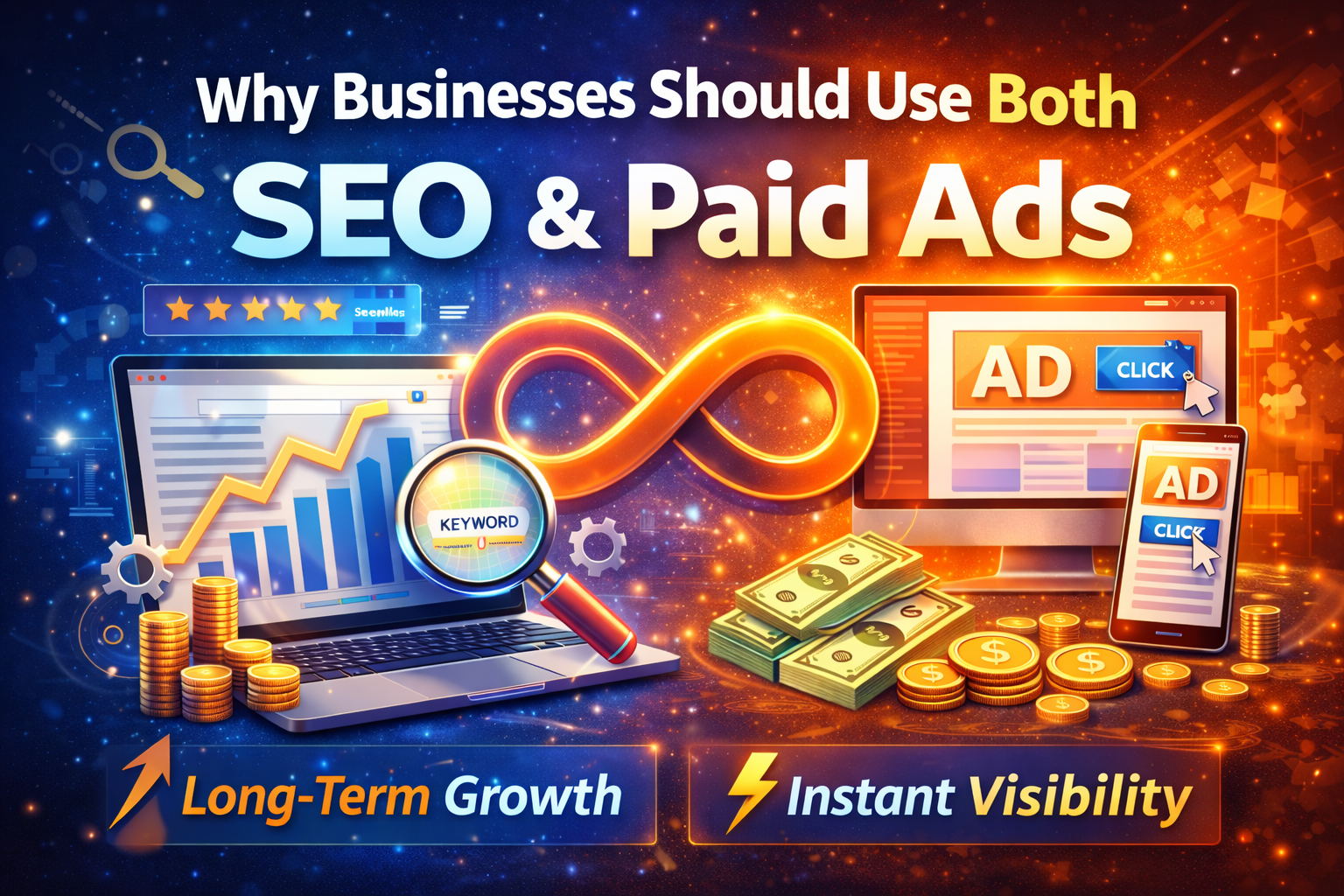
The most effective digital strategy often involves both SEO and paid ads. Combining SEO and paid ads allows businesses to capture both organic search traffic and paid ads visibility.
When companies dominate both organic listings and paid ads, they control more space in search engine results pages.
This approach maximizes visibility and strengthens overall marketing performance.
A hybrid approach helps businesses achieve long term growth while still generating short-term revenue.
Paid ad campaigns can provide valuable insights into relevant keywords, which can improve a company’s SEO strategy.
At the same time, SEO builds sustainable organic traffic that reduces reliance on advertising.
When deciding SEO vs paid ads, businesses should consider their business objectives, timeline, and budget.
If a company needs instant traffic, paid campaigns may be the right choice. If the goal is long term growth, investing in SEO is often the better option.
Businesses should align their marketing strategy with their business goals.
In competitive industries, paid ads can become expensive due to high ad spend.
However, SEO can still help businesses gain visibility through strategic content creation and link building.
This is why many companies combine SEO services with paid advertising to compete effectively.
Ultimately, the SEO vs paid ads debate should not focus on choosing one over the other.
SEO builds authority, credibility, and ongoing traffic, while paid ads provide instant visibility and immediate opportunities for lead generation.
Businesses that combine SEO and paid ads often achieve the best results.
Choosing between SEO vs paid ads depends on your goals, resources, and timeline. SEO helps build long term growth, generate organic traffic, and establish credibility with search engines.
On the other hand, paid ads deliver immediate results, making them perfect for product launches, promotions, and instant traffic.
The smartest digital marketing approach is often a combination of both SEO and paid ads. This hybrid strategy allows businesses to gain quick visibility while also building sustainable online authority.
If you’re unsure where to begin, consider speaking with experts offering SEO services and paid advertising support. Many agencies provide a free consultation to help determine the best strategy for your business.