Search has changed. In 2026, ranking on page one is only half the game. The other half is showing up inside the AI-generated answers that now sit above those organic results. AI powered seo isn't a future concept-it's the reality shaping how brands earn traffic, citations, and revenue right now.
This guide walks you through exactly how to use ai tools for search engine optimization in this new landscape, from workflows and content creation to technical fixes and visibility tracking. Whether you run an agency or manage SEO in-house, you'll find step-by-step plays you can start running this month.
AI-powered SEO is the practice of using artificial intelligence tools and large language models to improve search visibility across both traditional search engines and AI-driven search assistants. Those assistants include Google AI Overviews, ChatGPT with browsing, Gemini, Perplexity, and Microsoft's Copilot. AI-powered SEO tools leverage artificial intelligence and machine learning to process data at a scale no human team can match.
There are two sides to this coin. The first is doing SEO for ai search-earning citations and mentions inside ai generated answers so your brand appears when AI assistants respond to user queries. The second is using AI for SEO-automating keyword research, content creation, audits, and technical seo tasks to move faster and more accurately.
Here's what makes this different from traditional seo:
As of early 2026, about 25.8% of U.S. Google searches display an AI Overview, and that figure climbs to roughly 39.4% for informational queries. AI is transforming SEO by personalizing search results and synthesizing answers before a user ever clicks a link.For example, if you're optimizing an article like "best CRM for small business 2026," your content needs to satisfy both what appears in traditional top-10 search results and the sources cited in ai overviews-since research shows around 30% of domains cited in AI Overviews don't even appear on page one for those same queries.
Throughout this guide, you'll see terms like ai seo, ai driven seo, ai visibility, and content quality used frequently. These aren't buzzwords-they represent distinct concepts you need to track and act on.
Search in 2026 is a hybrid experience. Users encounter traditional blue links, AI summaries above organic results, and fully conversational AI interfaces. The line between "searching" and "chatting with an assistant" has blurred significantly.
Personalization means search results now differ by user in ways that go beyond location. AI systems draw on browsing history, prior queries, and contextual signals. If a user previously searched for enterprise software, their next search for "project management tools" may surface entirely different sources than someone with a small-business browsing pattern. AI tools analyze millions of ranking signals in real-time to determine which content surfaces for each individual query.
Conversation and context carryover have changed how people interact with search. Google's AI Mode now has over 75 million daily users who use multi-step queries that build on previous answers. This means content must serve not just an initial search intent but also probable follow-ups. AI predicts future ranking opportunities through trend analysis of these evolving query patterns.
Answer-first layouts are the biggest shift. When ai overviews appear, position-1 CTR drops by roughly 46–58% compared to queries without them. In some datasets, 83% of queries with AI Overviews end in zero clicks to external sites. That's a massive change in how organic traffic flows.
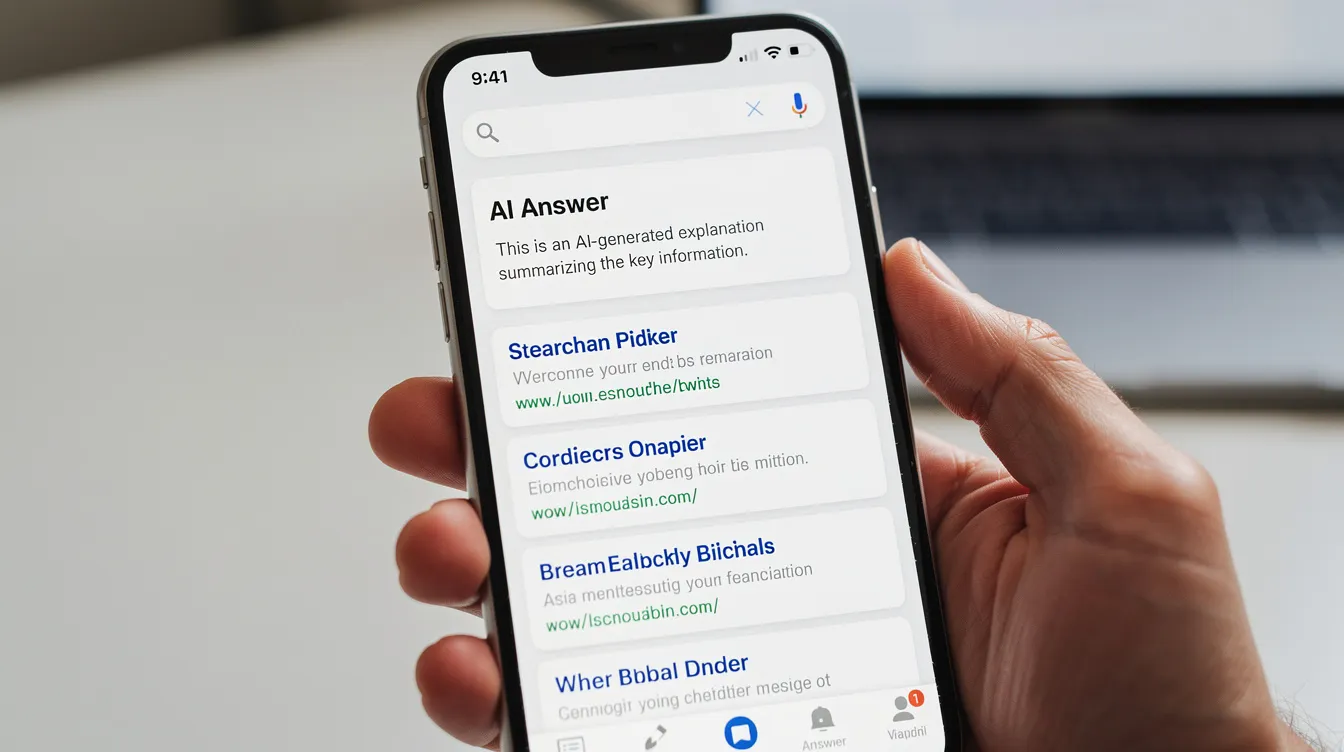
AI visibility is the new metric to care about. It measures how often your brand or URL is cited, summarized, or linked inside AI answers across platforms-not just where you sit in classic search engine rankings. Google AI Overviews, Bing's Copilot, ChatGPT browsing, Perplexity, and Gemini all pull from overlapping but different sources. AI models prioritize authoritative and credible sources in content, meaning your domain reputation matters differently than it did in simple keyword matching.
This is exactly why seo teams must track both organic rankings and AI visibility. Content quality and E-E-A-T matter even more in this environment because AI systems favor sources that demonstrate genuine expertise. AI-driven tools improve content relevance by analyzing user intent across these platforms, and the brands that understand this dual tracking will outperform those that only watch traditional rank tracking.
This section introduces practical workflows rather than individual tools, so you can plug in your preferred ai seo tools regardless of which specific platforms you use. The goal is to build repeatable processes that your team runs weekly or monthly.
Keyword intelligence and clustering. Start with a large keyword export-say 10,000 terms from your research tool of choice. Feed that list into an AI clustering tool that groups terms by user intent, semantic similarity, and likelihood of triggering AI Overviews. AI tools can analyze large datasets for keyword research, turning a messy spreadsheet into a structured content map in hours instead of weeks. AI tools provide intelligent keyword research by identifying untapped keyword opportunities you'd miss scanning manually. AI-driven tools enhance keyword research efficiency and accuracy at a level that goes well beyond simple keyword matching or filtering by search volume alone.
Content creation and optimization. Use generative ai to draft outlines and first versions, then refine them inside a content optimization platform that benchmarks your draft against top ranking pages for your target keywords. AI tools can automate keyword research and content optimization in a single workflow. This is where ai powered seo tools deliver the biggest time savings for content marketers.
Technical SEO monitoring. AI-driven seo tools can automate technical site audits, grouping similar errors, detecting root causes, and predicting which issues will hurt traffic most. AI-driven technical SEO improves crawl efficiency and indexability, and AI-driven tools can predict future search trends by monitoring how technical health correlates with visibility changes.
AI search visibility tracking. New tools monitor whether your pages are cited in AI Overviews, ChatGPT answers, and Perplexity results. AI tools can track brand visibility across ai search engines and show your share of voice relative to competitors.
AI can predict future keyword trends within minutes, and AI can predict keyword trends within minutes-these capabilities transform what used to be quarterly planning exercises into continuous intelligence. The next sections go deeper into content creation, technical seo, and visibility tracking with step-by-step detail.
Content creation is where most teams first feel AI's impact. But here's the thing-content quality and originality still decide long-term performance. An ai writer can produce a solid first draft in minutes, but a generic draft that doesn't reflect real experience will underperform a thoughtful piece every time.
Using an AI writer for SEO follows a clear progression. Start with ideation: feed your target keywords and audience data into an AI tool to generate topic and angle suggestions based on People Also Ask data, google search console trends, and forum questions. Then move to outline generation, where the AI sketches headings, subheadings, and main points aligned with what shows in existing top-10 results and ai generated results. Finally, the ai writer creates a first draft tailored to search intent and your target audience. AI-generated content aligns with user search intent to improve engagement metrics when done correctly.
The content optimization flow is where drafts become competitive. Copy your draft into an ai seo tool that evaluates content depth and quality-these tools conduct content analysis and optimization by evaluating how your draft covers entities, headings, internal links, and semantic relevance compared to top ranking pages. AI tools help identify high-impact keywords for content optimization and surface content gaps you didn't realize existed. AI can identify content gaps and suggest improvements quickly, often flagging missing subtopics in seconds.
Here's what a day in the life looks like in 2026. A marketer is creating a long-form guide titled "Best CRM for Small Business 2026." They plug in subtopics-ease of use, integrations, pricing, support-and the ai writer generates an initial draft with current statistics. They paste that draft into a content optimization platform, which flags missing comparison tables and gaps where AI Overview sources discuss mobile app performance and user reviews. The marketer then sources specific quotes, adds screenshots, includes an author bio with relevant experience, and adjusts the tone to match their brand voice. They fact-check pricing and product names to avoid hallucination. AI-generated content can enhance on page seo performance, but only after this human layer of refinement.
AI assists in structural content creation for better visibility in search engines. Organized content structure improves AI parsing in SEO, making your pages more likely to be cited in ai overviews. AI can automate content creation and updates for improved quality over time, and AI provides competitive intelligence by analyzing competitor performance so you know exactly where your content falls short.
Risks are real. Generic AI text, factual errors, and over-optimization (forced keyword density, unnatural headings) can hurt you. Always perform human editing for brand voice, unique angles, and E-E-A-T signals like author bios, case studies, and proprietary data. The content creation process must include manual review-there's no shortcut around it.

Technical issues-404 errors, slow pages, broken JavaScript, indexing problems-can erase the gains of great content. Technical SEO ensures a smooth user experience on websites, and without it, even your best articles won't earn the visibility they deserve. In 2026, AI helps find and prioritize fixes faster than any manual audit ever could.
Modern crawlers use AI to detect patterns across large sites, group similar issues together, and suggest likely root causes instead of dumping raw error lists on your team. Automated technical audits diagnose and prioritize technical issues on websites by severity and estimated traffic impact. AI tools can catch technical issues faster than humans, especially on sites with thousands of pages where the same template misconfiguration might affect hundreds of URLs.
AI-powered tools handle specific tasks that used to eat hours. AI tools can generate alt text for images to improve SEO-automatically writing descriptive captions for image-heavy pages. AI can automate technical SEO tasks like generating alt text across entire product catalogs. These tools also summarize crawl reports in plain language for stakeholders: "30% of product pages load slower than 3 seconds on mobile, likely reducing AI Overview citations for those product category queries." Tools evaluate websites based on content quality and technical SEO together, giving you a unified view.
A practical weekly health check looks like this: run a full site crawl, let the AI layer summarize critical issues (orphan pages, non-indexed content, Core Web Vitals failures, CLS problems), then export a prioritized backlog. Sort by impact-fix canonical errors first, then core vitals, broken JS, lazy-loading issues, and mobile performance. AI can analyze website traffic data for technical SEO improvements and correlate patterns between technical health and ranking changes.
Schemas help improve AI understanding of content context, and structured data can enhance visibility in ai search results. Adding proper schema markup to your key pages makes them easier for both search algorithms and AI systems to parse, increasing the odds of citation.
Integrating technical seo data with google search console and server logs lets an AI layer interpret anomalies automatically. If there's a sudden drop in AI Overview citations for a key page, the system can cross-reference crawl data, status codes, and content changes to isolate the cause. AI tools enhance targeting for ai powered search results and chatbots by ensuring your technical foundation supports discoverability across every platform.
Tracking only classic keyword rankings is no longer enough when AI assistants routinely answer queries without sending a click to your site. If your brand is cited in an AI Overview but you're not measuring that, you're flying blind.
An AI Overview citation is when a search engine's AI summary names your brand or uses your URL as a source. An AI mention might happen inside a ChatGPT answer or a Perplexity summary. These are distinct from a traditional organic SERP position-your site might not rank in the top 10 for a query but still be the primary source cited in the AI-generated answer. Over 96% of AI Overviews appear for informational queries, so informational content is where citation tracking matters most.
AI search visibility tools monitor your target keywords, capture the ai generated answers for those queries, identify which domains are cited, measure share of voice among sources, and show sentiment or positioning. Some tools capture responses from multiple platforms-Google AI Overviews, ChatGPT, Perplexity-to show where you're visible and where competitors are getting cited instead. AI tools analyze millions of ranking signals instantly to determine what makes a source "citable" in each context.
Teams use these insights to discover which topics AI associates with their brand, find content gaps where competitors are cited instead, and refine online content to better match AI answer patterns. If you see competitors being cited in AI Overviews for topics you cover, but your content isn't among sources, it's time to adjust.
Here's an example scenario. A SaaS brand tracks "project management software for agencies" across Google AI Overviews and ChatGPT over a month. They monitor 20 search queries and discover their brand is never cited for queries about resourcing features or agency workflows-even though their organic search rankings for those terms are decent. Competitor brands are cited instead. They respond by creating a new content hub answering agency-specific resourcing questions, including case studies and guest-authored content. Over the following month, AI citations increase and relevant traffic begins recovering.
Add AI visibility KPIs to your seo toolkit alongside classic metrics. Track the number of AI Overview citations per core page, impressions in AI answers, assisted conversions from AI-cited pages, and your share of voice versus competitors. These numbers tell you whether your seo strategy is working in the new search landscape.
This is the "do this now" section. Three concrete mini-projects for the next 30 days.
Play 1: AI-enhanced content refresh. Open google search console and identify pages with declining impressions or clicks over the past 90 days. Pick your top 3–5 decaying pages. Run each through an ai seo tool to compare against current top results and new AI Overview answers for the same topics. Use an ai writer to update sections that are outdated, add missing subtopics the tool flags, and restructure headings to match what AI sources currently favor. Re-publish with a fresh date. This ensures content remains relevant and competitive. Expect 1–2 days per article.
Play 2: Keyword clustering and content map. Take a raw keyword dump for one product line or service area-ideally 1,000–5,000 terms. Feed the list into an AI clustering tool that groups by intent, semantic similarity, and valuable keywords with high opportunity. The output becomes a clear hierarchy of pillar and cluster pages. Map each cluster to an existing page or flag it as a content gap that needs a new article. AI-driven seo tools can predict future search trends from these clusters, revealing where demand is heading before competitors notice. Budget about a week for this play.
Play 3: AI search FAQ hub. For each core topic, use AI to mine People Also Ask data, forum questions from Reddit and Quora, and ai search suggestions. Compile the most common questions, then write concise, authoritative answers optimized for AI Overview citation. An organized content structure improves AI parsing, and FAQ-style pages with clear question-and-answer formatting are among the most frequently cited in ai overviews. Structure these as one resource per topic, internally linked to your pillar content. This play takes about 3–5 days for a set of 3 hubs.
By mid-2026, there are hundreds of ai powered seo tools on the market. The last thing your team needs is another long tools list. You need a selection framework.
Start by picking one tool for each major job rather than building an overlapping stack:
Evaluate tools against these criteria: data quality and freshness, integration with your existing stack (CMS, analytics, google docs), transparency about how AI sources and scores are calculated, pricing versus actual usage volume, and available support or learning resources. SEO generated $68.1 billion globally in 2022-there's no shortage of vendors chasing that market, so be selective.
Run a trial project before committing. Spend 2–4 weeks using the tool on a single content cluster or one site section, then measure uplift in search engine rankings, AI citations, and organic traffic. That evidence makes it easy to justify the investment-or move on to a different option.
Agency and in-house needs differ. Agencies care about multi-client workspaces, permissions, white-label reporting, and seo platforms that scale across accounts. In-house seo teams care more about collaboration, integration with internal data sources, and alignment with existing digital marketing workflows.
The best ai seo stack is the one your team actually uses consistently-not the one with the longest feature list. A seo ai tools setup that sits unused is worse than a simple two-tool combo that gets run every week.
AI SEO is powerful, but it carries strategic and ethical risks if misused. Ignoring these risks can undo the efficiency gains you worked hard to build.
Content quality risks are the most common pitfall. Bland, derivative articles flood the web when teams over-rely on ai generated content without human editing. Hallucinated facts-AI confidently stating wrong numbers or making up product features-can damage trust and trigger penalties. The danger of flooding search results with low-value pages is real, and search engine algorithms are getting better at detecting and devaluing thin content.
Google and other search engines accept AI-generated content as long as it is helpful, accurate, and not primarily created to manipulate search rankings. Spammy automation-churning out hundreds of pages of repetitive tasks repackaged with different target keywords-still violates policies. If your seo practices rely on volume without quality, you're playing a losing game. Empirical data shows that sites with generic AI content suffered noticeable traffic drops in core updates around March 2026, while sites with original data gained traffic.
Legal and ethical concerns are growing. Copyright issues from training data are under active regulatory scrutiny-the EU is investigating how Google uses content creators' work in AI Overviews. Disclosure when content is heavily AI-written is increasingly expected. Privacy matters when connecting analytics or CRM data to AI tools.
Consider an example: an AI-generated medical article might include plausible-sounding treatment recommendations that are actually outdated or wrong. Without expert review, publishing that content could harm readers and expose your brand to liability. E-E-A-T stands for Experience, Expertise, Authoritativeness, Trustworthiness in content-and nowhere is that more important than in sensitive niches.
Governance basics every team should adopt: maintain editorial standards for every piece of content, require mandatory human review of AI outputs, clearly document where AI is used in seo optimization workflows, and run periodic audits of content quality across your site. Machine learning algorithms powering search engines are evolving to reward genuine expertise-make sure your content reflects it.
AI driven seo success depends as much on people and processes as on tools. You can buy the best seo toolkit on the market, but if nobody on your team knows how to use it effectively, you'll waste both time and budget.
New and evolving roles are emerging across the seo industry:
Essential skills for the team include prompt design for SEO tasks, a high-level understanding of how LLMs work, basic data literacy to interpret dashboards, and the ability to translate AI insights into prioritized roadmaps.
Upskill existing team members with internal playbooks: standard prompts for content briefs, documented QA checklists for AI content, and shared templates for reports based on AI insights. You don't need to hire an entirely new team-you need to give your current people better workflows.
Start with small, well-defined experiments rather than a full overhaul. Pick one content cluster, one set of repetitive tasks, or one site section. Prove the value with measurable seo performance improvements, then scale successful AI workflows across more content and markets.
AI should remove grunt work so humans can focus on strategy, storytelling, and the kind of differentiating expertise that search algorithms and ai engines increasingly reward.
AI driven seo in 2026 means three things: optimizing for ai search so your brand gets cited in AI answers, using ai seo tools to work at scale without sacrificing quality, and protecting content quality and trust at every step. AI tools can analyze millions of ranking signals instantly, but the strategic decisions about what to optimize, who to target, and how to differentiate still require human intelligence.
Teams that combine AI's speed with human creativity and domain expertise will outperform those running only manual seo optimization-or only push-button automation. The sweet spot is in the middle, and the teams finding it are already seeing results.
Pick one or two of the concrete plays from earlier in this article and start within the next seven days. Analysis paralysis is the biggest enemy of progress in digital marketing. A single content refresh or AI visibility audit will teach you more about ai search optimization than reading another ten articles.
Looking ahead over the next two to three years, expect more conversational search, richer AI overviews pulling from more diverse sources, and increasing importance of demonstrable expertise and original data in on page optimization. The landscape will keep shifting-continuous testing and adaptation aren't optional, they're the strategy.

This FAQ answers common questions not fully covered in the main sections, focused on practical concerns marketers have in 2026.
AI-generated content is allowed by major search engines as of 2025–2026, provided it is helpful, accurate, and not primarily created to manipulate search rankings. Always perform human review for facts, tone, E-E-A-T signals, and originality before publishing AI-written articles. Over-reliance on purely AI content farms leads to thin, duplicative pages that underperform or get devalued by search algorithms. Maintain clear editorial standards and version control so you can demonstrate how AI outputs were edited and approved before going live.
Start by tracking time saved on repetitive tasks like content briefs, audits, and first drafts, then measure how that time gets reallocated to strategy and experiments. Core performance metrics to monitor before and after adoption include organic traffic, search engine rankings, AI Overview citations, conversion rate, and content production velocity. Run 60–90 day experiments where one product area uses AI-augmented workflows while another stays manual, then compare outcomes. Include tool subscription costs and any training time in your ROI calculations for a realistic view.
AI changes how keyword research works but does not eliminate the need for understanding demand, topics, and search intent. AI tools are best at clustering, finding long-tail opportunities, and surfacing patterns across relevant keywords-but humans still decide which topics align with business goals and which valuable keywords are worth pursuing. Conversational search generates more natural, longer search queries, making AI-assisted clustering even more important. Combine AI-generated keyword suggestions with manual review of SERPs, forums, and customer interviews for the best results.
Review key money pages and top-traffic articles at least every 6–12 months, or sooner if you see ranking or click declines in google search console. Use ai powered tools to quickly compare your content against current top results and new AI Overview answers for the same topics. Fast-moving niches like tech, finance, and regulations may require quarterly refreshes, while evergreen guides can be checked less frequently. Track update dates and their impact to build an internal benchmark for how often refreshes pay off in your niche.
AI seo tools can level the playing field for small teams by automating research, outlines, meta descriptions, and basic seo optimization. A lean stack for solo creators might include one ai writer, one content optimization tool, and access to a basic crawler or technical checker. The key is focus: pick one niche, build a tight content cluster with AI assistance, and avoid spreading seo efforts too thin across dozens of topics. Even small teams should maintain a light editorial process to keep AI outputs on-brand and trustworthy.