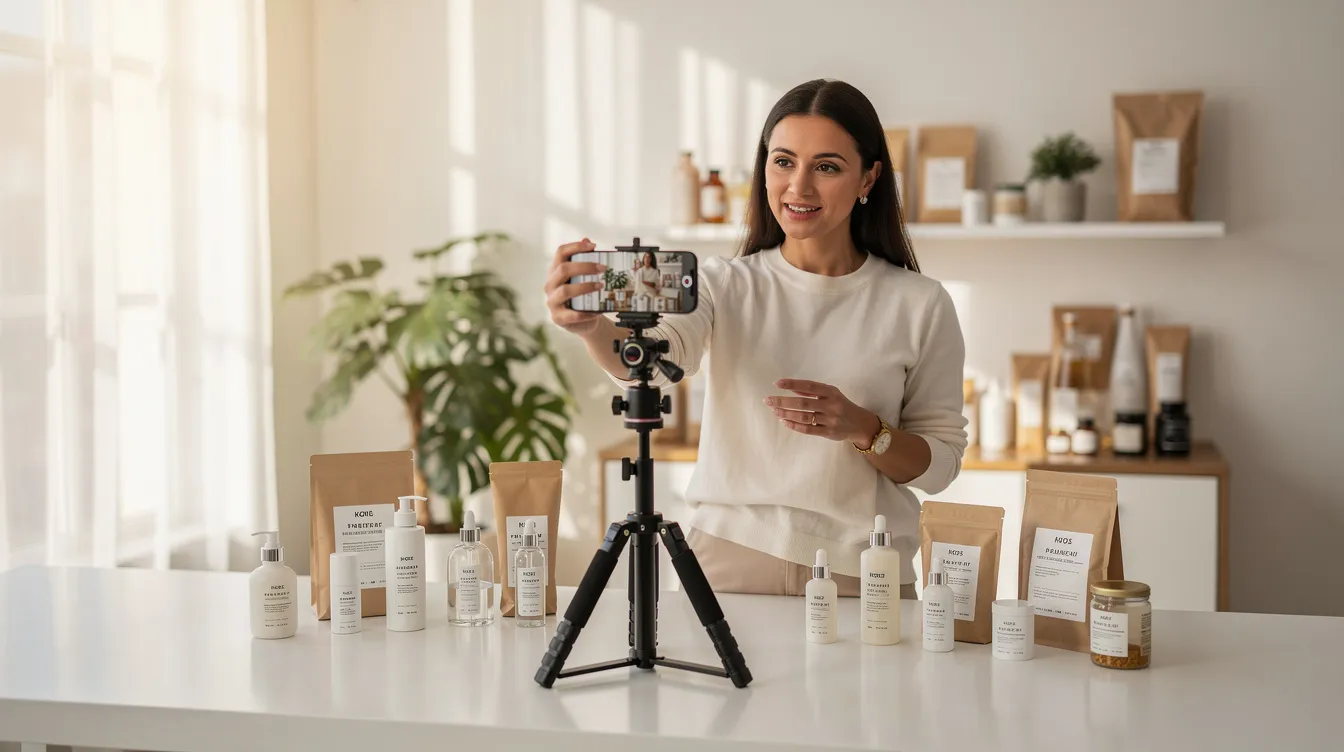
Meta Andromeda 2.0: Facebook Ads Strategies for Online Stores
Meta Andromeda 2.0: How to Win Facebook & Instagram Ad Campaigns in the New Era
Meta's ad delivery system has undergone its biggest architectural shift since the introduction of machine learning-based auctions. If you run Facebook ads or Instagram ads for an ecommerce brand, understanding how Meta Andromeda 2.0 works is no longer optional. It directly determines whether your ads even get a chance to compete.
This guide breaks down what changed, what it means for your creative strategy and campaign structure, and how to build a practical system that thrives under the new retrieval engine.
Key Takeaways
Meta Andromeda 2.0 is the 2026 upgrade to Meta's AI-powered ads retrieval system. Formally announced on October 28, 2026, it represents a fundamental shift in how the advertising platform selects which ads reach which users. If you manage Facebook ad campaigns or Instagram ads, the changes below should reshape how you think about creative, targeting, and budget allocation.
- Andromeda 2.0 can score over one billion ads per second on a single GPU server, fundamentally changing how winning creatives are retrieved before the auction even begins. If your ad is not selected during retrieval, no bid or budget can rescue it.
- Creative diversity and concept-level variety now impact campaign performance far more than cosmetic tweaks to ad images or ad copy. Ads must vary across at least two dimensions to receive unique Entity IDs, meaning each distinct concept gets its own auction ticket.
- Broad targeting combined with strong signals from your online store (Meta pixel, Conversions API, first-party data) generally outperforms hyper-segmented custom audience setups under Andromeda 2.0.
- Success still depends on classic levers - offer quality, landing page experience, and accurate conversion tracking - not just "pleasing the algorithm."
- This article provides a practical, step-by-step framework for structuring Meta ads campaigns, creative testing, and budgets to thrive in the Andromeda 2.0 era.
What Is Meta Andromeda 2.0 and Why It Matters in 2026
Meta Andromeda is the company's large-scale ads retrieval engine. Think of it as the gatekeeper that decides which candidate ads even enter the auction for a given user impression. Here is what you need to know about what it is and why it changed everything.
- Meta launched Andromeda in late 2024 for ad delivery, building a retrieval layer that filters billions of ads down to a few thousand candidates before the standard auction runs. It operates across all Meta surfaces: Facebook advertising, Instagram ads, Reels, Stories, and Marketplace.
- The "2.0" label refers to a series of 2025–2026 upgrades: a Mixture-of-Experts model architecture, single-GPU fused pipelines, and hardware co-design with NVIDIA GH200 Grace Hopper servers. These changes deliver massively higher throughput and significantly better relevance matching.
- This retrieval step sits before bidding. If your Facebook ad never becomes a candidate at the retrieval stage, manual bids, increased ad budget, or refined audience targeting cannot save it. Retrieval is the first and most important hurdle.
- Meta reported a 2.4% increase in conversions on Facebook since 2025 attributable to improvements in Andromeda's retrieval engine. In Q2 2025, personalization improvements drove nearly 4% higher conversions on Facebook mobile Feed and Reels. These numbers demonstrate improved matching, but they are platform-wide averages, not a guarantee for every ad account.
Not all changes affect advertisers equally. Here are the concrete upgrades that matter most for performance marketers running Facebook ad campaigns and Instagram ads.
- Andromeda 2.0 uses a Mixture-of-Experts (MoE) architecture for improved ad evaluation. Instead of running every ad through the same scoring model, multiple specialized "experts" handle different user interest patterns and ad types. A gating network dynamically routes each user-ad pair through the most relevant expert subset, producing higher relevance without proportional compute increases.
- In early 2026, Meta and NVIDIA co-designed a unified GPU pipeline for faster ad processing. Index matching (filtering by audience rules), scoring, and top-K selection all run on the same GPU box. This reduces network overhead by roughly 100x and enables Andromeda to process over one billion ads per second. Andromeda 2.0 achieves approximately 300 times fewer inference-time FLOPs than its predecessor, which is why it can evaluate such enormous candidate sets in real time.
- Richer signals now feed the retrieval system. Andromeda evaluates ads based on semantic similarity and user intent, incorporating sequences of ad engagement (likes, saves, shares), recent purchase behavior from an online store, co-engagement across Facebook and Instagram, and even alignment between ad creative and landing page content. Through improved context awareness, Andromeda 2.0 better understands user interests and delivers real-time ad matching.
- What did not change: advertisers still define campaign objectives, budgets, placements, and audience guardrails in Ads Manager. There is no "Andromeda toggle." Your ad account settings, Facebook pixel configuration, and campaign structure remain under your control. Andromeda 2.0 does not "take over" account strategy.
How Andromeda 2.0 Fits into the Facebook & Instagram Ads Delivery Flow
Understanding exactly where Andromeda sits in the delivery pipeline helps you diagnose why certain ads get no delivery while others scale effortlessly.
The ad delivery flow works in four stages:
- Eligibility and policy checks - Your ad passes Meta's ad policies, format requirements, and basic audience rules.
- Andromeda retrieval (candidate selection) - The retrieval engine narrows tens of millions of eligible Facebook ad and Instagram ad candidates to roughly 1,000 per impression opportunity. Andromeda uses a hierarchical tree structure for this retrieval, clustering ads into a hierarchical tree based on similarity.
- Traditional auction ranking - The remaining candidates are scored on bid amount, estimated action rate, and creative quality.
- Delivery and pacing - The winning ad is shown and delivery pacing kicks in.
Key points about this flow:
- Andromeda evaluates ads using computer vision and natural language processing, meaning the visual and textual content of your ad directly influences whether it becomes a candidate for a specific user.
- Creative content and historical performance heavily influence whether an ad enters the candidate set. A single ad with poor engagement history gets deprioritized during retrieval, regardless of budget.
- Audience targeting rules (locations, age, exclusions, custom audience, lookalike, Advantage+ audiences) are enforced at the retrieval stage. Andromeda does not ignore your settings - it works within them while adding intelligent matching.
If your ad never makes it past retrieval, it never enters the auction. That is the central insight of Andromeda 2.0.
Creative Concepts vs. Cosmetic Variations: The New Ground Rules
This is where most advertisers need to rethink their approach. Andromeda 2.0 does not treat every uploaded file as a unique ad. It evaluates whether ads are genuinely distinct.
- A creative concept is a distinct buying motivation or story. "Fast shipping" is a concept. "Premium ingredients" is a different concept. "Perfect gift for her" is yet another. Each concept targets a different pain point, appeals to a different persona, or tells a different story.
- Cosmetic tweaks - changing button color, swapping background music, minor text edits on the same product shot - often behave like the same concept in performance data. Andromeda evaluates similarity, and near-identical creatives may not receive separate Entity IDs.
- One Entity ID equals one auction ticket in Andromeda. Creating ads targeting different pain points generates multiple Entity IDs, giving you more chances to enter retrieval for different user contexts. Visual disparity is crucial for ads to be recognized as distinct.
- Quality matters more than quantity in ad creatives post-Andromeda. Three genuinely different concepts will almost always outperform ten variations of the same ad.
Here is an ecommerce example to make this concrete. For a skincare brand selling a moisturizer, instead of uploading five versions of the same product shot with different text overlays, try these three distinct concepts:
| Concept |
Hook |
Format |
Target Motivation |
| "Dermatologist-approved results" |
Clinical authority, test results |
Static image with before/after |
Trust and credibility |
| "5-minute routine for busy moms" |
Time-saving, simplicity |
Short video reel showing routine |
Convenience |
| "Real users, real skin" |
User testimonials, social proof |
UGC carousel ad with reviews |
Peer validation |
All three can drive to the same landing page while competing in entirely different retrieval branches.
Designing a Meta 2.0 Campaign Structure for Stability
Fragmented campaign structures are one of the biggest performance killers under Andromeda 2.0. Multiple campaigns targeting the same audience compete against each other, cannibalizing delivery and confusing the learning algorithm.
- Use one primary Sales or Advantage+ Shopping campaign per major market instead of running many small Facebook ad campaigns. A single campaign gives Andromeda a larger pool of candidates and signals to work with, leading to faster, more stable optimization.
- Keep 1–2 ad sets per campaign. For most brands, one broad prospecting ad set and one warm or custom audience ad set is sufficient. Running separate ad sets for every interest or demographic creates audience overlap and dilutes the ad budget.
- Start with 4–8 genuinely distinct concepts per ad set. As data accumulates and ad spend increases, scale up to 10–12 concepts. Ads with four to six creatives see 22% higher click-through rates compared to ad sets with only one or two creatives.
- This simplified structure helps Andromeda 2.0 learn faster, reduces overlap between your own ads, and stabilizes cost per acquisition over weeks rather than forcing you to troubleshoot erratic performance every few days.
Audience Targeting in the Age of Andromeda 2.0
The relationship between audience targeting and Andromeda's retrieval engine is nuanced. Here is when to go broad and when to stay specific.
- Broad targeting (open or age+country) often performs best for prospecting. Broad targeting increases ad eligibility in Meta Andromeda, allowing the retrieval engine to explore more user branches and find hidden demand pockets that manual interest stacking would miss. Broad targeting strategies outperform narrow targeting in Andromeda for most consumer products.
- Manual interest stacking and hyper-segmentation can still work for niche B2B offers or highly specialized products, but they restrict the retrieval pool and slow learning. Use them as a secondary or "soft" lever, not your primary strategy.
- For remarketing, custom audience segments remain valuable. Target website visitors from the last 30 days, past buyers (repeat customers you want to reactivate), engaged video viewers, and high-intent event audiences like Add to Cart. Targeting cold audiences is best handled through broad prospecting; warm audiences are where segmentation still earns its keep.
- Advantage+ audiences and Advantage+ Shopping Campaigns now integrate more signals from your Facebook ad account and online store, making them strong defaults for scaling ecommerce brands.

Creative Diversity: Formats, Angles, and "Entity-Like" Variety
Creative diversity directly controls how many retrieval branches your brand occupies. More genuinely diverse ad creatives mean more opportunities for Andromeda 2.0 to match your ads with different user intent signals.
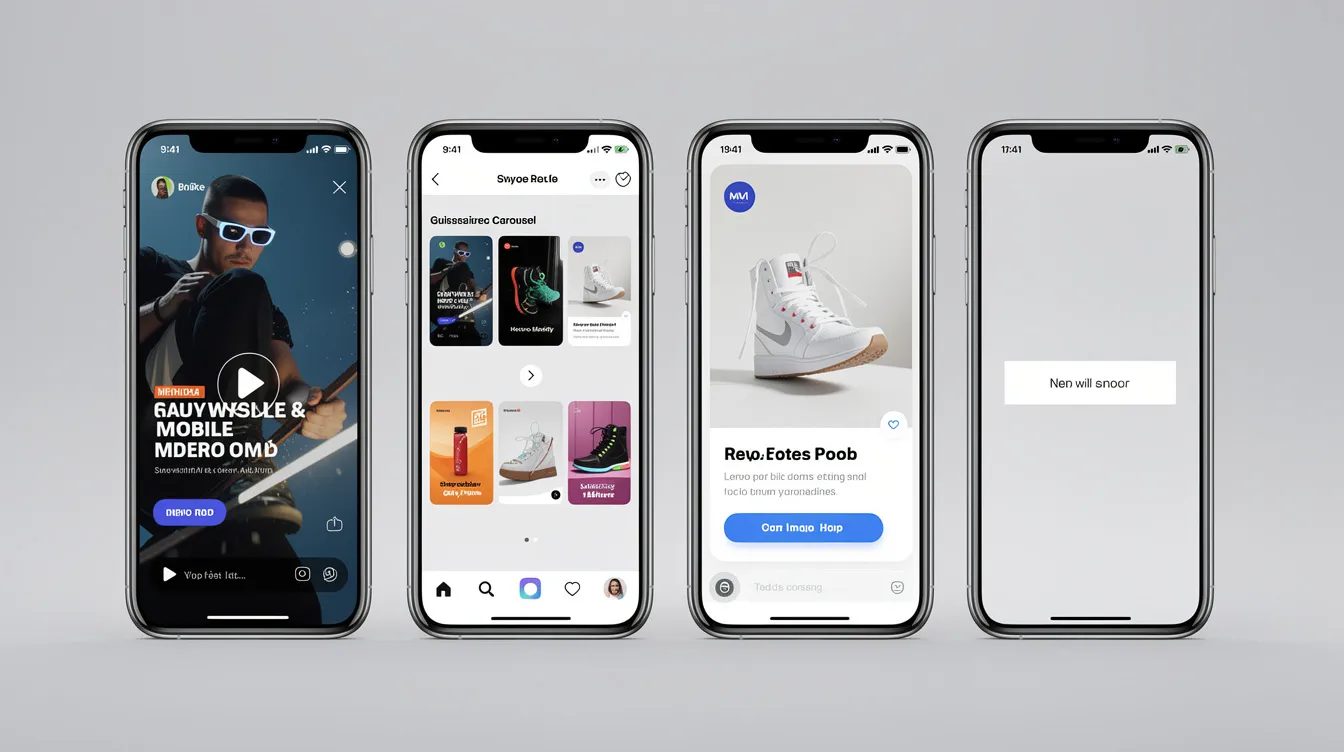
- Mix different formats: 15-second vertical video ads, product demo Reels, static image ads, a carousel ad showing product steps or benefits, and simple text-on-background explainer creatives. Using diverse ad formats boosts engagement and conversions because each format resonates differently depending on placement and user behavior.
- Diversify across angles: social proof (reviews, UGC), problem/solution stories addressing specific pain points, price/value comparisons, limited-time offers with a promo code, and lifestyle scenarios showing the product in use.
- Ten to fifteen diverse concepts are recommended for effective testing at scale. Advertisers should aim for 10–15 diverse concepts for Andromeda to maximize retrieval coverage. At moderate budgets, start with fewer and scale up.
- Video ads have the lowest effective cost per click at $0.18 on average, making the video format particularly efficient for prospecting. However, a static image or carousel ad can outperform video when the concept is stronger - format matters, but concept matters more.
- Andromeda 2.0 significantly boosts the personalization of ads shown to users, which means creative diversity increases the odds that at least one of your Facebook ads or Instagram ads resonates with a given user's immediate intent.
Fake diversity - dozens of videos built from the same raw footage with identical hooks that only differ in captions or background color - does not generate separate Entity IDs and wastes your creative volume.
Building a Concept-First Creative Testing Roadmap
A repeatable testing process prevents the chaos of random creative uploads. Here is how to build one.
- Start each month or quarter by listing 3–5 core customer motivations for your hero product. Common categories: save time, save money, look better, reduce a specific pain, feel safer. Each motivation should address a different set of pain points your target audience experiences.
- Turn each motivation into 1–2 creatives with specific hooks, visuals, and CTAs. A "save time" motivation might become a 12-second video reel showing the product in action with a hook like "Done in 30 seconds." A "look better" motivation might become a before/after carousel ad. This is how you find winning creatives systematically instead of relying on guesswork.
- Launch new concepts in the same campaign with evenly distributed initial budgets. Let Andromeda 2.0 allocate more ad delivery to early winners rather than manually picking favorites on day one. Creative testing works best when the system has room to explore.
- Evaluation windows: 7–14 days or 50 optimization events per ad set, whichever comes first, before making strong conclusions. Pulling a new ad after 48 hours because it "looks expensive" is one of the most common mistakes in digital marketing on Meta.
Balancing Creative Volume and Budget: Avoiding the Complexity Trap
Every creative you add needs enough impressions and clicks for Andromeda 2.0 to learn. Too many concepts on small budgets spread signals too thin and keep the entire campaign stuck in the learning phase.
- For $50/day per ad set, run 3–4 strong concepts. This gives each creative enough data to be evaluated within a reasonable timeframe.
- For $200/day per ad set, consider 6–8 concepts. More budget means more room for exploration without starving any single creative.
- At $500+ per day, you can support 10–12 or more concepts, but only if your creative strategy genuinely supports that many distinct ideas.
- Chasing 20+ "test" creatives at $20/day per ad set usually prolongs the learning phase and creates noisy, inconclusive data. Multiple ads fighting for scraps of budget help no one.
A disciplined weekly routine:
- Kill clear underperformers (high CPA, low relevance score, zero conversions after meaningful spend).
- Re-invest budget into top 2–3 winning ads.
- Introduce 1–2 new challengers to keep creative fatigue at bay.
From Ad Images to Landing Pages: Matching the Message to the Experience
Andromeda 2.0 increasingly leverages post-click behavior signals. A great ad that sends users to a confusing or slow page creates negative feedback loops that reduce future delivery.
- Align the headline and hero image on your landing page with the primary hook in your Facebook ad or Instagram ad. If your ad promises "dermatologist-approved results," the landing page should immediately reinforce that claim. Landing page visitors who bounce quickly send a negative signal back to Meta.
- Fast-loading, mobile-optimized landing pages are essential. Most Meta traffic is mobile. Aim for sub-3-second load times on 4G. Slow product pages kill conversions before Andromeda can help you.
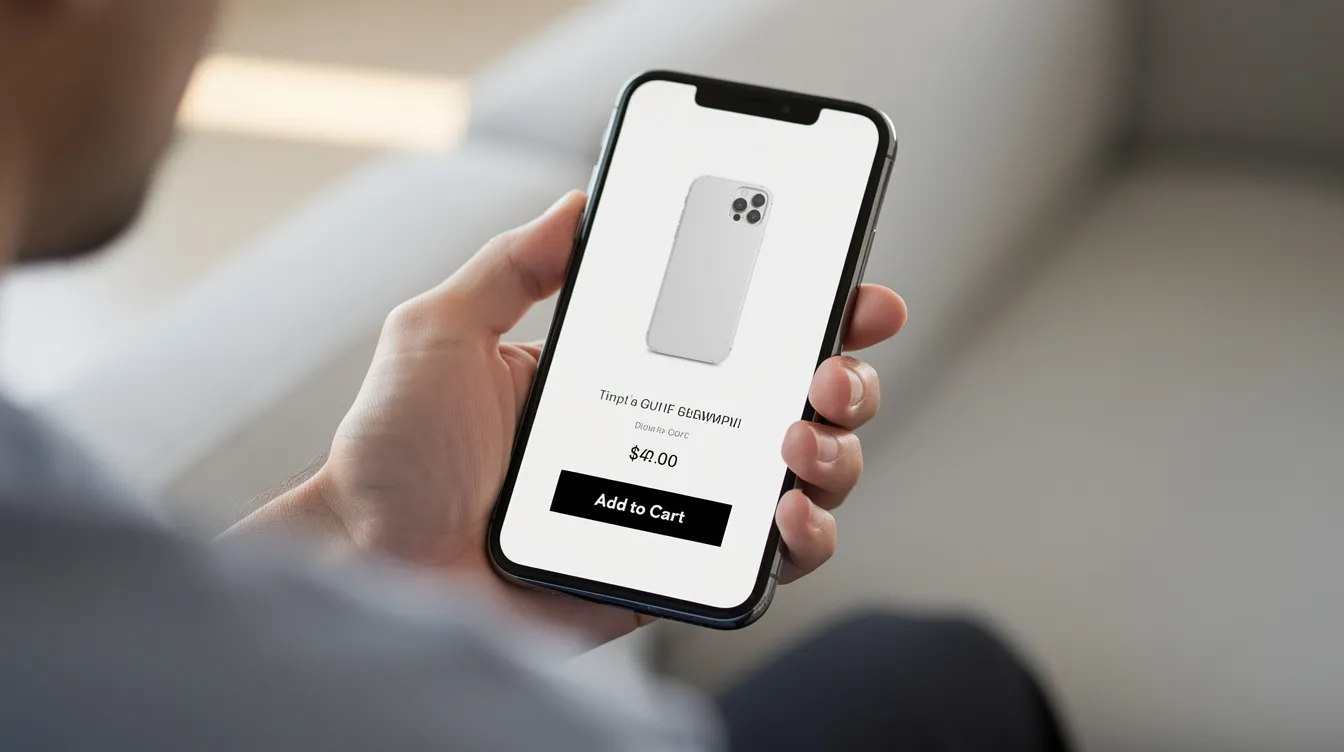
- Clear, above-the-fold CTAs ("Add to Cart," "Start Free Trial") and minimized friction (guest checkout, auto-fill) turn retrieval wins into actual revenue.
- Poor UX, confusing pricing, or slow checkout sends negative signals back to Meta. Over time this reduces campaign performance and increases your cost per purchase, even if the ad creative itself is strong.
Facebook Ad Campaign Objectives and How They Interact with Andromeda 2.0
Objective choice still matters because Andromeda 2.0 uses different outcome signals depending on what you optimize for.
- Sales/Conversions and Advantage+ Shopping remain the primary objectives for ecommerce and online store growth. They optimize for purchase events, which is the signal most aligned with revenue.
- Upper-funnel objectives (Traffic, Engagement, Video Views) can be used strategically to warm up pixels for new markets or products, especially for brands with very low purchase volume. This helps Andromeda build an initial user model before you push for sales.
- Mismatching objective to business goal hurts ROAS. Optimizing for traffic when you care about sales teaches Andromeda to find clickers, not buyers. Your entire campaign learns the wrong lesson.
- For high-ticket B2B offers, test at least two objectives at launch (Sales and Leads) and keep each in its own campaign. Running multiple campaigns with different objectives is one of the few cases where separate campaigns make strategic sense - because the signals are fundamentally different.
Fine-Tuning Budget Strategy and Scaling Under Andromeda 2.0
Budget management under Andromeda 2.0 requires patience and math, not gut feel.
- Reverse-engineer your ad spend from expected conversions and target cost. Example: if your average order value is $60, your desired CPA is $20, and you want 5 daily purchases, your minimum daily budget should be around $100 (5 × $20). Going below that starves the system.
- Scale gradually. Increase budgets by 15–25% per day on stable, profitable campaigns instead of sudden 2–3x jumps. Large jumps can shock the learning system and spike CPAs temporarily.
- Large budget cuts are equally destabilizing. Rather than slashing spend across the board, pause only clearly unprofitable ad sets. Constant tinkering with the ad budget keeps campaigns in a perpetual learning phase.
- For short-term events (Black Friday, 48-hour flash sales), use lifetime budgets so Andromeda 2.0 can distribute spend intelligently over the defined window instead of burning through a daily budget too early.
Using Advantage+ Shopping Campaigns with Andromeda 2.0
Advantage+ Shopping Campaigns (ASC) are purpose-built to leverage Andromeda's retrieval capabilities. For many ecommerce brands, they have become the default scaling tool.
- ASC automatically blends prospecting and remarketing. Andromeda 2.0 decides who should see which products and creatives based on retrieval signals, often outperforming manually separated prospecting and remarketing structures.
- Allocate a dedicated budget line to at least one Advantage+ Shopping campaign for any mature online store with sufficient catalog and Facebook pixel data. This is not a replacement for all other ads, but it should be a core pillar.
- Feed these campaigns with a curated mix of evergreen bestsellers and current promotions. Dynamic ads and dynamic product ads work well here, but defaulting to your full catalog without curation often leads to low-margin or out-of-stock items getting served.
- Separate manual retargeting campaigns may still be useful for high-value segments - repeat customers getting subscription upgrade offers, or cart abandoners receiving a specific promo code - where messaging must be very specific and controlled.
Pixel, Conversions API, and Tracking Hygiene in 2026
Andromeda 2.0 is only as smart as the data you feed it. Robust conversion tracking is the foundation that makes everything else work.
- Double-check that Facebook pixel events (ViewContent, AddToCart, InitiateCheckout, Purchase) are firing correctly on key pages of your online store. Missing events mean missing signals, and missing signals mean Andromeda cannot learn which users convert.
- Implement Conversions API (CAPI) alongside the pixel to send server-side events. This improves attribution accuracy and provides resilience against browser restrictions, ad blockers, and iOS privacy changes. A properly configured Meta pixel plus CAPI gives you the strongest possible signal foundation.
- Regularly reconcile Ads Manager conversions with your ecommerce platform orders (Shopify, WooCommerce, etc.) to catch under- or over-reporting. Discrepancies of more than 15–20% suggest tracking issues that need immediate attention.
- Better attribution lets Andromeda 2.0 more accurately learn which ads and audiences drive real revenue. This improves campaign performance over time because the system gets a clearer picture of what a "good" impression looks like.
Interpreting Metrics: From CTR to Contribution Margin
Vanity metrics can mislead you. Here is how to evaluate what matters in a world where Andromeda handles retrieval and you handle strategy.
- Click-through rate and thumb-stop rate (for video) indicate attention but do not guarantee profitable sales. A high-CTR ad with terrible conversion rates is draining your ad spend, not growing your business.
- Track cost per purchase, return on ad spend (ROAS), and contribution margin (revenue minus product cost, shipping, and ad spend) per campaign. Contribution margin is the metric that tells you whether scaling is actually making you money.
- Segment performance by creative concept, not just by individual file. Identify which idea - not which color or font - produces the best combination of CTR and ROAS. This is how you build a creative strategy that compounds over time.
- Run weekly reviews to flag creative fatigue: rising frequency combined with falling CTR and higher CPA usually signals it is time to rotate in new concepts. Do not wait until performance collapses to react.
Creative Testing for Facebook and Instagram Ads Together
Running Facebook ads and Instagram ads from the same ad account means your creative testing strategy must account for placement differences while maintaining concept consistency.
- Use automatic placements initially, but design creatives that look native in vertical mobile environments (9:16 aspect ratio) to fully leverage Instagram ads and Reels. Over 90% of Meta's ad inventory now uses vertical formats.
- Group placements logically when testing: one ad set emphasizing Feed and Explore, another emphasizing Stories and Reels, can reveal useful performance patterns. Or start with a different ad for each surface.
- Take winning creatives from one placement (e.g., a strong video reel that works on Reels) and adapt the aspect ratio and ad copy for Feed or Stories, keeping the core concept intact.
- Andromeda 2.0 can detect which placements a user prefers and bias ad delivery accordingly - but only if enough creative versions exist for each surface. Providing multiple ads in different formats gives the system more to work with.
Coordinating Meta Andromeda 2.0 with Google Ads for Full-Funnel Growth
Meta ads under Andromeda 2.0 and Google Ads serve different roles in your sales funnel. Using them together multiplies their individual effectiveness.
- Meta excels at demand generation - discovery, impulse buys, and awareness. Google Ads captures high-intent searches later in the journey. A user who sees your Instagram ad today may Google your brand name tomorrow.
- Align messaging across both platforms. The benefits highlighted in your Meta winning creatives should appear in Google Ads responsive search ad headlines and display campaigns. Consistency reduces confusion and shortens the path to purchase.
- Use Google Analytics 4 and UTM tagging to understand how Meta-sourced landing page visitors later convert through branded search or Shopping campaigns. This cross-channel view prevents you from undervaluing Meta's contribution.
- A strong, consistent brand story across Meta and Google makes Andromeda's retrieval signals more predictive because users who encounter your brand elsewhere arrive on Meta already primed to engage.
Using Instagram Creators and UGC to Feed Andromeda 2.0
Creator content and user-generated content are among the most effective ways to build creative diversity at scale, especially when targeting cold audiences.
- Partner with Instagram creators whose audiences match your ideal personas. Whitelist their content as ads within your Facebook ad account, giving you access to authentic creative that feels native to the platform.
- Authentic UGC videos and testimonials often outperform polished studio footage for cold audiences, sending stronger relevance signals to Andromeda. A real person talking about your product in their kitchen carries more social proof than a scripted commercial.
- Build repeatable processes: turn organic posts, Stories, and Reels into ad creatives by securing usage rights and editing for length. A 60-second organic video can become a 15-second ad with a different hook and CTA.
- Varied faces, styles, and settings naturally increase creative diversity and help your brand surface on more branches of Andromeda's retrieval tree. Each creator brings a visually and tonally different ad, automatically generating separate Entity IDs.
Protecting and Optimizing Ad Spend in the Meta 2.0 Era
Everything in this guide connects back to one goal: getting more revenue per dollar of ad spend. Here is how to protect efficiency.
- Consolidate fragmentary campaigns and audiences. Running multiple campaigns against the same audience forces your own ads to compete, driving up costs. One campaign per objective per market gives you more control and cleaner data.
- Cap daily ad spend increases and limit tests to a manageable number of simultaneous variables. Do not change audiences, creatives, and bids all at once - you will never know what caused the result.
- Conduct regular audits to remove under-spending, low-delivery ad sets. Every active ad set with zero delivery is noise. Ensure that each active creative has a clear purpose in your overall strategy.
- Use automated rules sparingly. For example, pause other ads that exceed a certain CPA threshold or that have zero conversions after a set spend amount. This protects your downside while giving Andromeda time to learn and stabilize.
Future Directions: Where Meta Andromeda May Go After 2026
The following is informed speculation based on Meta's published engineering direction and industry trends. Nothing here is confirmed for a specific release.
- Expect deeper use of first-party data from online stores, stronger privacy-preserving modeling, and more granular creative analysis. Meta may start providing feedback on which specific on-screen elements (faces, text overlays, color palettes) contribute to ad performance, going beyond aggregate creative quality scores.
- The line between retrieval and ranking will likely continue to blur. Andromeda 2.0 already integrates advanced GPU architecture to optimize performance. Future versions may perform near-ranking-level work during retrieval, making early creative and audience decisions even more consequential.
- Generative AI tools for ad creation will likely integrate more deeply into the workflow. Dynamic ads, catalog-driven creatives, and AI-generated variations are all on the horizon - but human creative strategy will remain the differentiator.
- Invest in robust creative pipelines, data quality, and cross-channel attribution now. These assets retain value regardless of algorithm changes. Follow Meta's public engineering and business updates, but prioritize controlled experiments over reacting to every rumor about "how Andromeda works."
FAQ: Meta Andromeda 2.0 and Your Ad Strategy
Does Meta Andromeda 2.0 replace manual audience targeting completely?
No. Andromeda 2.0 does not remove manual targeting. It enforces your rules (locations, age ranges, exclusions, custom audience definitions) while adding intelligent retrieval inside those boundaries. Broad targeting often works best for prospecting because it gives the retrieval engine more room to explore, but there are still valid use cases for specific remarketing segments such as past buyers, cart abandoners, and engaged video viewers.
How many creatives should I run per ad set with a limited budget?
For ad sets under $50/day, run 3–4 distinct concepts. At around $100/day, consider 4–6 concepts. Only scale beyond that when daily data volume supports it. Each creative needs enough impressions and clicks for Andromeda 2.0 to evaluate it reliably. Running too many concepts on tiny budgets keeps the ad set in the learning phase and produces noisy, inconclusive data.
Is video required to perform well with Andromeda 2.0?
Video is not strictly required. Many static images, carousel creatives, and collection ad formats still perform very well, especially when the concept is strong. That said, video ads tend to have lower effective cost per click and are particularly powerful for demos, transformations, and testimonials in video format. Judge format choice by actual test results, not assumptions. Use the format that best tells your story.
How do I know when to refresh my creatives?
Monitor frequency, CTR, cost per purchase, and ROAS together. A combination of rising frequency with falling CTR and worsening CPA is the classic signal of creative fatigue. When you see it, rotate in 1–2 new concepts at a time rather than replacing everything. Keep top performers active until data clearly shows they are no longer efficient. For high-spend accounts on broad campaigns, expect creative refresh cycles of roughly 2–4 weeks.
Can I run the same strategy on both Facebook and Instagram placements?
The overarching strategy - concept-first testing, broad audiences, stable budgets - absolutely applies to both. However, creatives should be tailored to each placement's norms and formats. A square image that works in Facebook Feed may underperform as a Reel. Design for vertical (9:16) as your default, monitor performance by placement in Ads Manager, and if needed, create separate ad sets with creatives designed specifically for feeds versus Stories and Reels. The same ad running everywhere without format adaptation leaves performance on the table.