If you've noticed your Meta campaigns behaving differently over the past few weeks, you're not imagining things. Meta's ad system has undergone its most significant retrieval upgrade since Andromeda first launched, and the ripple effects are already reshaping how ads deliver, who sees them, and what kind of creative work actually moves the needle.
This guide breaks down exactly what the Meta Andromeda update changed in 2026, what the numbers say, and how to restructure your campaigns, creatives, and tracking to stay ahead.
Meta Andromeda is an AI-powered ad retrieval and distribution engine that sits before the auction and ranking stages in Meta's ad system. Its job is deceptively simple: take tens of millions of eligible ads in the system and reduce them down to a shortlist of a few thousand per person, per impression opportunity. Think of it as the gatekeeper that decides which ad candidates even get a shot at competing in the auction.
The architecture overhaul of Andromeda was first introduced in late 2024, when Meta partnered with NVIDIA on Grace Hopper superchips and its own MTIA hardware to run models roughly 10,000 times more complex than previous retrieval systems. Throughout 2025, the system stabilized globally, with Meta reported a 2.4% increase in conversions attributed to Andromeda since 2025. The 2026 update is best understood as a performance and scale upgrade, not a brand-new system.
By 2026, Andromeda's architecture incorporates advanced AI models for improved personalization. It uses deep neural networks running on specialized hardware to scan billions of user-ad combinations in milliseconds. Meta publicly reports improvements in conversion rates and ads quality from Andromeda, particularly for advertisers embracing creative diversification. The system is no longer experimental. It is the production infrastructure behind every ad impression on Facebook and Instagram.
The updates to Andromeda were announced on 28 October 2026, delivering an increase in retrieval capacity, model complexity, and semantic understanding of ad creatives. This isn't a subtle tweak. It represents a meaningful step forward in how Meta's retrieval system processes and evaluates candidate ads.
Here's what changed:
The model complexity increased 10 times compared to early Andromeda versions, all without requiring proportional hardware cost increases.
Meta's ad delivery pipeline has three key stages: retrieval (Andromeda), ranking (GEM/Meta Lattice), and auction/bidding. Andromeda handles the first stage, and it is the most consequential because Meta's ad retrieval system acts as a gatekeeper filtering eligible ads before anything else happens.
Andromeda converts each ad creative into a semantic embedding that encodes visuals, copy, audio, and serving context. It then matches these embeddings to users' interest and intent embeddings. Andromeda analyzes ad creative and user behavior to improve ad relevance, and it allows advertisement matching based on real-time user behavioral signals. The candidate ad tower now incorporates where and when an ad might appear, along with contextual factors that affect relevance.
Audience targeting settings in Ads Manager now act more like guardrails and suggestions. Creative signals have become the primary driver of who sees what. This is why cosmetic creative tweaks barely move performance, while big shifts in concept, persona, or benefit can materially change outcomes.
Andromeda supports a multi-touch customer journey advertisement delivery. It can evaluate over one billion ads per second, meaning it processes an enormous range of user-ad combinations before the ranking model even gets involved. The retrieval stage is where most of the filtering happens, and creative quality is the dominant input signal.

Before Andromeda, successful Meta campaigns often relied on heavy interest stacks, advertiser defined audiences, layered lookalike audiences, and extensive exclusion lists. Media buyers spent hours building multiple ad sets aimed at different audiences, each with a handful of creatives. That era is fading.
Meta's advertising system now emphasizes creative-led targeting over traditional audience targeting. The 2026 update indicates a move towards broader audience targeting strategies, where creative investment drives performance more than traditional media-buying techniques. Andromeda reduces reliance on narrow manual targeting strategies because its deep neural networks can identify pockets of demand that no human-built interest stack would ever find.
Andromeda still respects hard constraints like geography, age, and remarketing lists. But it aggressively down-weights granular interest-level audience targeting. In practice, broad targeting combined with differentiated ad creatives now routinely outperforms complex targeting setups. Across 32 client accounts in various industries, broad targeting consistently led to 15–22% CPA improvements compared to stacking many narrow audience segments.
Advertisers who keep splitting multiple ad sets by micro-interests or narrow demographics in 2026 are fragmenting their signal and hurting Andromeda's learning loop. Creative targeting is the new audience strategy. The creative itself tells Andromeda who should see the ad.
Here's a concept that most advertisers miss: the entity ID. Think of it as Meta's internal label for what an ad "is" at a conceptual level. Andromeda clusters similar ads into one entity ID, and one entity ID equals one auction ticket in Andromeda. If you have 30 ads that all look and sound the same, you effectively have one auction ticket, not 30.
Meta's Andromeda uses computer vision and language models to analyze ads for entity IDs. Entity IDs are assigned based on visual and semantic similarity. Minor creative changes like headline variants, background colors, or button shapes are often treated as one conceptual entity by these models.
This means 30–50 near-duplicate ads effectively behave like the same ad in the retrieval stage, wasting creative volume and ad spend. You're paying to upload and manage dozens of files that Andromeda treats as a single candidate.
Creating diverse ads increases the number of entity IDs, which gives you more retrieval opportunities. Here's what that looks like in practice:
Fresh entity IDs come from different personas, benefits, formats, or environments, not from superficial design tweaks. If you want Andromeda to match ads to different audiences, you need to give it genuinely distinct concepts to work with.
Running more ads is no longer enough. Andromeda cares about distinct purchase motivations and stories, not file count. Creative diversity is critical for successful advertising strategies in Andromeda, and the system actively favors diverse creatives over similar variations.
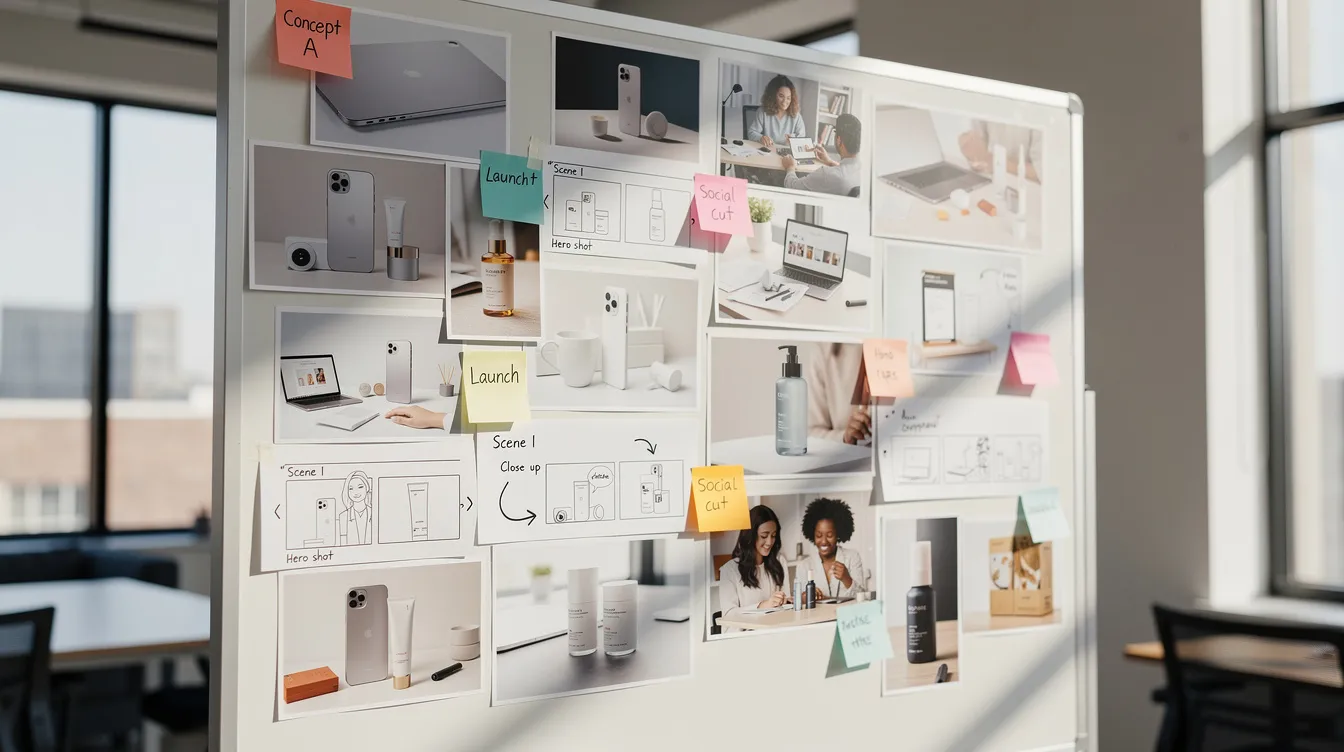
Creative diversity means fundamentally different hooks, narratives, offers, and angles that speak to different buying motivations: price, convenience, status, health, gifting, fear of missing out, social proof. Each of these represents a separate conceptual bucket that Andromeda can match to different user profiles.
Contrast this with pure creative volume: many files that still convey the same message. Twenty minor variations of a product-on-white-background image all collapse into the same conceptual bucket. Andromeda rewards creative diversity and penalizes repetition. Ads with distinct concepts get more retrieval opportunities than a stack of near-identical variants.
Here are the benchmarks worth knowing:
For most ecommerce brands, 10–20 active concepts per core campaign is a practical range. This creative count gives Andromeda enough variety to explore different user segments without spreading budget so thin that no individual concept exits the learning phase.
In 2026, the strongest ad creatives are "semantically dense," meaning they give Meta's models clear, machine-readable signals about what the product is, who it's for, and why it matters. Creative quality drives 56% of campaign performance outcomes, which means creative production is no longer a nice-to-have. It's the primary performance lever.
Here's how to design creatives that Andromeda's retrieval engine can properly classify and match:
Cluttered visuals, vague claims, or generic lifestyle shots without clear product context give Andromeda weaker signals and reduce retrieval scores. If the model can't quickly understand what your ad is about, it can't effectively match it to the right users.
Old testing frameworks built around A/B testing of small cosmetic differences underperform in a creative-first retrieval world. Testing a blue button versus a green button tells you almost nothing when the retrieval engine treats both versions as the same ad.
A better approach:
This creative testing approach directly supports higher return on ad spend and more consistent scaling under Andromeda. Creative diversification isn't about producing more files. It's about producing more ideas.
The single most impactful structural change you can make in 2026 is consolidation. Fewer campaigns, fewer ad sets, more creative diversity inside each ad set. Fewer ad sets with more creatives outperform fragmented structures because they give Andromeda more signal density per optimization event.
Here's a recommended 2026 template for ecommerce brands:
Over-segmentation through many campaigns by interest, narrow lookalikes, or small audience splits fragments learning and hinders Andromeda's retrieval efficiency. Use Campaign Budget Optimization with broad targeting and allow 7–14 days for learning, provided your Pixel and Conversions API are correctly configured.
Good campaign structure gives Andromeda better signal density, more accurate creative ranking, and more predictable ad spend scaling.
Broad targeting in 2026 usually means minimal constraints: age, location, necessary exclusions, and letting Andromeda explore the rest. This approach works because the retrieval engine is far better at finding profitable user pockets than any human-built interest stack.
Broad targeting plus differentiated creatives outperforms narrow stacks for most ecommerce brands, especially at higher ad spend levels. In one case study, a Mexican fashion ecommerce account shifted from detailed targeting with few creatives to broad targeting with roughly 20 creative concepts. The result: CPA dropped from $12.50 to $9.80, a 22% reduction.
Meta's Advantage+ Shopping campaigns and other Advantage+ formats leverage Andromeda to automate placements, budget shifts, and placement optimization. These shopping campaigns hand over more control to the retrieval and ranking models, which is exactly where the performance gains live in 2026.
When to keep constraints:
Inside those fences, let the model work broadly. Broad targeting partners with creative diversity to give Andromeda enough room to find profitable pockets of demand.

Audience targeting is not dead, but its role is narrower and more strategic than it was two years ago.
Core business rules still belong in Ads Manager settings:
There are use cases where lookalike audiences or interest targeting can still help. New ad accounts with limited conversion data benefit from initial audience scaffolding. B2B or niche segments where broad delivery would waste most impressions still need some manual targeting guardrails. Early-stage testing on small budgets can use interests to accelerate learning before transitioning to broad.
But stacking 5–10 overlapping interests or running multiple 1–2% lookalikes that heavily constrain delivery cuts off Andromeda's exploration potential. In 2026, think of audience targeting as guardrails plus remarketing, not as the primary performance lever. The winning ad is determined by creative quality and signal strength, not by how cleverly you've sliced your audience.
Cleaner conversion signals make Andromeda's predictions and retrieval ranking significantly more accurate. If Andromeda is the engine, your tracking data is the fuel. Bad fuel means bad performance, no matter how sophisticated the engine gets.
Meta Pixel alone is no longer sufficient under modern privacy constraints. Joint Pixel plus Conversions API is the 2026 standard. Here's what that requires:
Poor signal quality leads directly to higher CPMs, slower learning, and unreliable creative test results. If your event match quality score is low, Andromeda's deep neural networks are learning from noisy data, which means every decision downstream is less accurate.
If you do nothing else from this article, audit your Pixel + CAPI setup this week. It's the highest-leverage fix for most ad accounts.
The Andromeda update changes optimal ad spend allocation across the funnel for ecommerce brands. The transition has not been painless. ROAS declined by 7% during the Andromeda rollout for many advertisers, and top performers lost 31% in ROAS after Andromeda's implementation before adapting their strategies. Landing page conversion rates fell by 17% post-Andromeda for accounts that didn't update their post-click experience.
These numbers aren't meant to scare you. They're meant to emphasize that the old playbook no longer works and that adaptation is required.
Here's a benchmark budget mix for ecommerce accounts:
Prospecting performance increasingly depends on creative diversity, not narrow audiences. Retargeting relies on dynamic product ads and relevant post-click experiences, including your landing page. A persistent creative testing budget ensures new concepts can be validated and promoted into scaling campaigns without disrupting stability.
Ad spend allocation in 2026 is less about toggling audiences and more about balancing exploration (new creatives) with exploitation (proven winners).
Your day-to-day workflow in Ads Manager should evolve to match Andromeda's creative-first logic. Here's how:
Naming conventions. Name campaigns and ad sets around creative theme, persona, or benefit rather than audience slices. "Prospecting - Problem-First Hook" is more useful than "Prospecting - Interest: Yoga + Meditation" when the audience is broad anyway.
Weekly rituals:
Avoid overreacting. Give Andromeda 7–14 days to learn from signal patterns before making big budget changes. Twenty-four-hour fluctuations are noise, not signal. The retrieval engine needs time to calibrate how each active ad performs across different user segments.
You can still use Ads Manager breakdowns by age, placement, and location to spot skewed delivery. But fix issues mostly via creative and landing page adjustments, not micro-targeting.
Multi-creative ad formats like carousels and catalog ads generally weather Andromeda better than single static image units, because they carry more semantic information per impression.
Here's what's working in 2026:
Andromeda does not have a hardcoded bias for video versus static. But video often carries richer signals-movement, storytelling, audio-that improve semantic matching. A static image with a strong hook and clear benefit can still outperform a poorly made video.
The practical recommendation: test a mix of ad formats per concept. Build one short video, one static image, and one carousel for each buying motivation. Let performance data decide the winning format for your brand and audience.
Ecommerce advertising in 2025–2026 has seen compressed ROAS, higher CPMs, and rising importance of creative and catalog size. The brands that are adapting fastest share common traits.
Ecommerce brands with larger product catalogs and more catalog-based ad creatives (collections, dynamic product ads) tend to generate more "retrieval tickets" because each product and creative combination represents a separate candidate in Andromeda's evaluation. This gives catalog-heavy brands a structural advantage.
Mid-priced products and mid-sized ecommerce advertisers often adapt faster because they can create more ad creatives and iterate on creative diversity without long approval cycles. They have enough budget to support several ads through the learning phase but aren't so large that organizational friction slows them down.
Single-SKU brands or small catalogs must compensate with stronger creative diversification across benefits, use cases, and audiences. A single product with one angle and one creative is invisible in a system evaluating billions of candidates. But a single product with ten genuinely distinct concepts has ten chances to be retrieved.
No amount of Andromeda sophistication can fix weak offers, confusing landing pages, or poor on-site conversion rates. If clicks rise but purchases do not, the problem is post-click.
Creative output in a Meta Andromeda world is an operating system, not a one-time project. The brands that maintain a creative library of diverse, high-performing concepts are the ones that scale consistently.
Here's a repeatable process:
Collaboration between performance marketers, creative teams, and product teams keeps the pipeline alive. The performance team knows what's working. The creative team can translate those signals into new narratives and hooks. The product team ensures accuracy and highlights new selling points.
Creative volume only works when tied to real diversification. Template-driven clones fill your creative production pipeline with noise, not signal.
Meta's stated direction points toward more automation, goal-based interfaces, and generative ad tools. The trend is unmistakable: Meta wants advertisers to tell it what outcome they need and let the system figure out how to get there.
This means "goal-only" campaign setups where advertisers specify an objective like "purchases at $X CPA" and Meta auto-configures much of the campaign structure, including placement optimization, budget allocation, and audience expansion. Meta calls this the natural evolution of Advantage+ automation.
Meta's growing suite of AI creative tools-Advantage+ creative, AI-generated backgrounds, text variations-further expands the pool of eligible ads in the retrieval system. These tools can help small teams maintain creative diversity at scale by generating format-specific adaptations of core concepts.
But generative AI cannot replace strategic direction. It can produce variations, but it cannot decide which buying motivations matter for your brand. Human strategy still defines the angles. AI helps express them across more formats and placements.
2026 is the year advertisers must get comfortable letting Andromeda handle more mechanics while they focus on strategy, messaging, and post-click experience.
Here's a concrete 30-day roadmap to adapt your existing Meta account to the 2026 Andromeda environment.
The goal is not to rebuild everything overnight. It's to systematically move from an audience-first meta strategy to a creative-first one, with clean signals supporting every decision.
Below are answers to common questions about adapting to the 2026 Andromeda environment.
Manual audience targeting is not obsolete, but its role is narrower than ever. It's best used for enforcing business rules like geography, language, and customer exclusions, while most performance gains come from creative and signal quality. Broad targeting outperforms highly segmented interest stacks for most mature accounts, though new or niche brands can still use lookalikes and interest audiences as temporary scaffolding. In 2026, think of audience targeting as guardrails plus remarketing, not as the primary lever for scale.
There is no official Meta rule, but data across ecommerce accounts suggests 4–10 genuinely distinct concepts per ad set is a strong starting point. Each concept should differ meaningfully in angle, persona, or benefit. Twenty minor variations of the same video usually behave like a single concept due to entity ID clustering. Expand creative volume only after you can consistently measure performance and confidently pause or scale individual concepts.
No. Andromeda can improve who sees your ad, but it cannot compensate for slow sites, confusing UX, or unattractive pricing. Monitor conversion rate, bounce rate, and time-on-site alongside Meta metrics. If clicks rise but purchases do not, the problem is likely post-click. Test better landing page alignment with ad promises and simplify the path to purchase for 2026 traffic patterns.
Meta has not published any rule that video always wins, but video often carries richer signals including motion, voice, and product demonstrations that help semantic matching in the retrieval stage. High-performing static images with strong hooks and clear benefits can still compete effectively, especially for retargeting or simple products. Test multiple formats per concept-short video, static image, carousel-and let performance data decide the winner for your brand.
Small advertisers should focus on 5–8 strong, diverse concepts rather than dozens of variations so each creative gets enough budget to exit the learning phase. Run one primary broad targeting campaign with CBO, ensure clean Pixel + CAPI setup, and increase budget cautiously as winners emerge. Disciplined creative testing and solid tracking matter more than trying to out-engineer Andromeda with complex structures at low ad spend levels.